
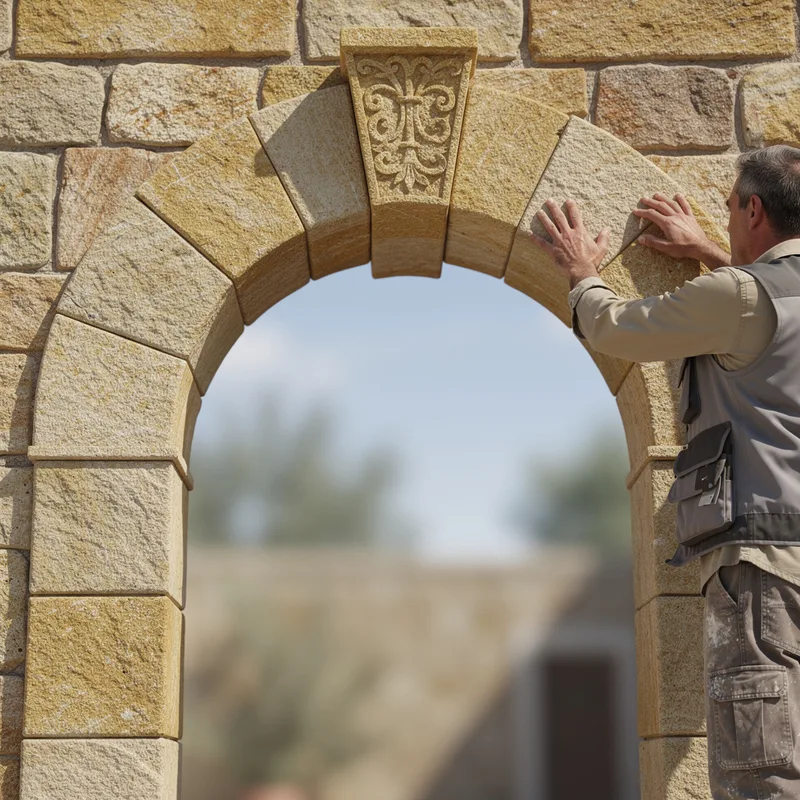
keystone
 1
7.2
1
7.2

- noun
- /ˈkiːstoʊn/
- "The keystone in the center arch at this top level is unfinished.
Loading YouTube…
Watch on YouTubeWhen you should have moved it to the right, you tilt it up when, Oh no, you've broken the keystone now.
- When you should have moved it to the right, you tilt it up when, Oh no, you've broken the keystone now.
- You have to put this sort of a keystone at the top and then it'll become stable out of the southern.
Examples
-
But the keystones of this hastily constructed stone wall quickly began to crumble.
Academic text (2003) -
The keystone was securely in place.
Academic text (2000) -
To my right was the Town Hall, with its gilded front and white marble faces gazing down from the keystones above the windows.
Fiction book (2001) -
The keystones, voussoirs, and brick detailing here are just first-rate.
Blog text (17) -
While the arch grows upward from the foundation, it is the keystone at the zenith whose force cascades downward, allowing it to support its own weight.
Blog text (28) -
The keystone is the crucial stone at the top of an arch that keeps the entire structure stable.
-
In building an arch, the final piece to place is the keystone, which holds all the other stones in place.
-
Without the keystone, the arch would collapse since it locks all the other stones together.
Synonyms
 1
8.4
1
8.4
The central stone at the top of an arch that locks it together


 1
6.4
1
6.4
The middle stone at the top of an arch that holds it together
A shaped stone placed at the top of an arch to hold it together
The central stone at the top of an arch that holds other stones
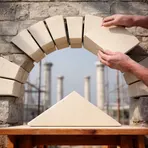
A wedge-shaped stone used to make an arch or vault
Compounds
 1
4.6
1
4.6
A nickname for Pennsylvania because it played an important role in early United States history

How Central

Surface Forms
Morphology
Etymology
The word keystone originally named the central, wedge-shaped stone at the top of an arch, literally key + stone, which 'locks' the other stones in place. That's why the keystone is the stone that keeps the whole arch from falling.