
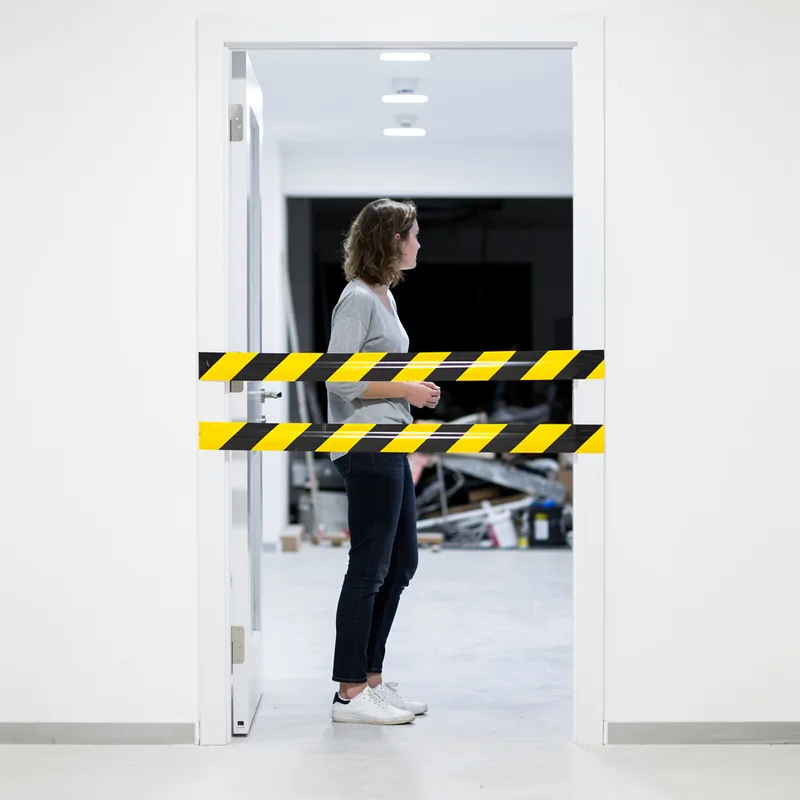
to keep out
 31
1.0
31
1.0

- phrasal verb
- /kip aʊt/
- The sign clearly states to keep out of the construction area for safety reasons.
- tried to keep out
Loading YouTube…
Watch on YouTubeNo, because the Supreme Leader tries to keep himself out of issues of everyday politics supposedly.
- No, because the Supreme Leader tries to keep himself out of issues of everyday politics supposedly.
- And then I it was, it was it suggested that I should join the Army, you know, to keep out of trouble.
- It says it's like a general informing his soldiers, it's better to keep out of battle forever than to risk a single wound.
Examples
-
We hope to keep you out of it Mr. Purcell.
-
They were kept out of the social circles that men of power were part of.
-
A little thing but enough to keep him out of the program.
-
You keep out of this.
-
"You should be glad you have us around to keep you out of trouble."
Fiction book (1990) -
"Look at it this way, it will keep you out of trouble."
Fiction book (2000) -
I have done my best to keep your name out of this.
Fiction book (1990) -
- Then keep out of my affairs and do as I say.
-
I don't care what you do with him, just keep him out of my sight.
Fiction book (1996) -
If I can't get my wall to keep people out of the country, you don't get to leave the country.
Synonyms
 ∞
1.0
∞
1.0
To stay away from something or not do it to stop something bad from happening
 590
1.6
590
1.6
Keep a distance from people or things you want to avoid
 384
2.3
384
2.3
Avoid going near people or places for safety
 127
2.4
127
2.4
To stay away from a place, person, or thing
 57
2.6
57
2.6
Avoid walking on places like wet grass or a freshly painted floor
 34
4.0
34
4.0
To stay away from people and things that may cause trouble or harm
Antonyms

Surface Forms
Morphology
The meaning 'to prevent someone from entering' is directly derivable from combining 'keep' (to prevent or restrain) with 'out' (not inside). This verb+particle construction is a common, literal compositional pattern found in many languages, so a B1 learner who knows both constituents would readily infer the MWE meaning.
Etymology
Keep out began as the simple words on signs and fences. The parts keep and out show the idea of telling someone to 'stay outside' and not go in, so it means 'to remain outside' or 'not enter'.