
kaolinite


 1
9.9
1
9.9
- noun
- /ˈkeɪəˌlaɪnɪt/
- Specialized
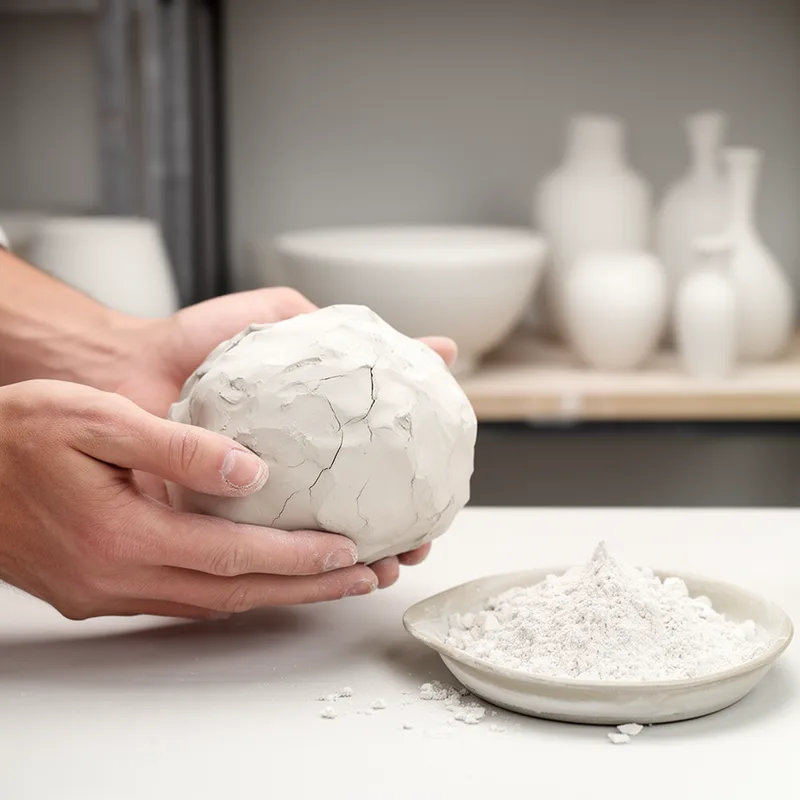
- Kaolinite is used in the production of kaolinite porcelain and ceramics.
Examples
-
The characteristic clay soil comprises uniform colloidal particles of kaolinite (between 0.2 and 2.0 µm).
Academic text (1994) -
The sand and silt are composed mainly of quartz, and the clays are composed of clay minerals such as kaolinite, montmorillonite, illite, and vermiculite.
Academic text (1993) -
The dominant soils of these areas are almost entirely kaolinite and iron oxides.
Academic text (1994) -
Andersland and Khattak14 conducted triaxial tests on kaolinite clay reinforced with paper pulp (cellulose) fibers.
Academic text (2016) -
Similar results have been reported for reinforced cohesive soil by Maher and Ho and Ahmad et al. Maher and Ho concluded from experimental tests on reinforced kaolinite that, for a given fiber content, increasing the length of fibers causes a reduction in strength.
Academic text (2016) -
In geology classes, students learn that kaolinite is a significant component of many clay-rich soils.
-
The artist preferred to use kaolinite in her pottery for its fine texture and white color.
Synonyms
 1
9.0
1
9.0
A fine white clay used to make pottery and paper

A fine white clay that people use to make ceramics and paper and to absorb liquids

A fine white powder from the ground used for pottery and paper
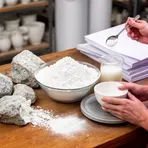
A fine white clay made when rocks break down and used to make pottery and as a filler
Surface Forms
Morphology
Etymology
Kaolinite comes from the Chinese place name Gaoling, meaning 'high ridge'. The fine white clay from that ridge was called kaolin, and kaolinite comes from kaolin plus the mineral ending -ite, so today it means the white clay mineral used in porcelain and ceramics.