

kaoline
- noun
- /ˈkeɪəˌliːn/
- UK
- Manufacturers often use kaoline as a filler in high-quality paper products.
Examples
-
The absorbent properties of kaoline make it valuable in various industrial processes.
-
The artist mixed kaoline with water to create a smooth porcelain glaze.
-
The artist uses kaoline for her pottery.
-
Did you know that kaoline is essential in paper production?
-
Manufacturers often use kaoline as a filler in high-quality paper products.
-
The absorbent properties of kaoline make it valuable in various industrial processes.
-
The artist mixed kaoline with water to create a smooth porcelain glaze.
Synonyms

 171
1.0
171
1.0

A heavy sticky earth that is soft when wet and used to make pots and bricks
 1
9.0
1
9.0
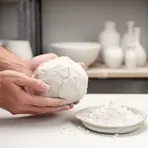
A fine white clay used to make pottery and paper

 1
9.9
1
9.9
A soft white or pale clay mineral used to make porcelain and pottery

A fine white powder from the ground used for pottery and paper
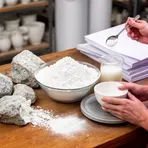
A fine white clay made when rocks break down and used to make pottery and as a filler

Fine white clay used to make porcelain and other ceramics
Surface Forms
Etymology
Kaoline comes from the name of a hill in China, Kao-ling, where people first dug a very fine white clay used to make 'china' or 'porcelain'. That's why kaoline now means the fine white clay used for ceramics, paper, and as an absorbent.