

jumbie
- noun
- Literature
- The villagers believe that a jumbie can bring mischief and trouble, especially during the celebrations.
- Mocko Jumbie
- Jumbie on stilts
- Jumbie stilt masquerade
Examples
-
Children tell stories about the jumbie that appears when the moon is full, making them fearful of the dark.
-
The jumbie will walk up and down outside, but it could never enter.
Academic text (1999) -
Various cultural influences have affected the modern Mocko Jumbie costumes.
Academic text (1999) -
In addition to the Mocko Jumbie, masquerades included animal representations.
Academic text (1999) -
As understood by the average U.S. Virgin Islander, the name "Mocko Jumbie" both describes what the masquerade is and what it does.
Academic text (1999) -
Many Mocko Jumbie masks are characterized by wide-open mouths and eyes.
Academic text (1999) -
A Mocko Jumbie is an effigy—a supernatural scarecrow—that ridicules ghosts and spirits and scares them away.
Academic text (1999) -
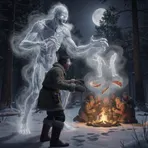
In Caribbean folklore, a jumbie is said to haunt the woods at night, scaring anyone who dares to enter.
Synonyms

 11
4.7
11
4.7

A ghost believed to frighten people
 4
9.9
4
9.9
A scary monster in Latin American stories that parents say to frighten children
 2
9.9
2
9.9
An evil spirit in Algonquian stories that makes people want to eat others
 1
9.9
1
9.9
A ghost or spirit in Caribbean stories, especially in Jamaica
 1
9.9
1
9.9
A ghost or goblin from Scottish and northern English stories
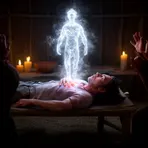
A spirit in voodoo that makes a dead body come back to life
Compounds
Surface Forms
Etymology
Jumbie comes from African words for 'spirit' that were brought to the Caribbean, and it names a mischievous or frightening 'ghost' from local folk tales. A helpful way to remember it is to think of the similar English word zombie, since both words link to the idea of a spirit that can haunt people or places.