
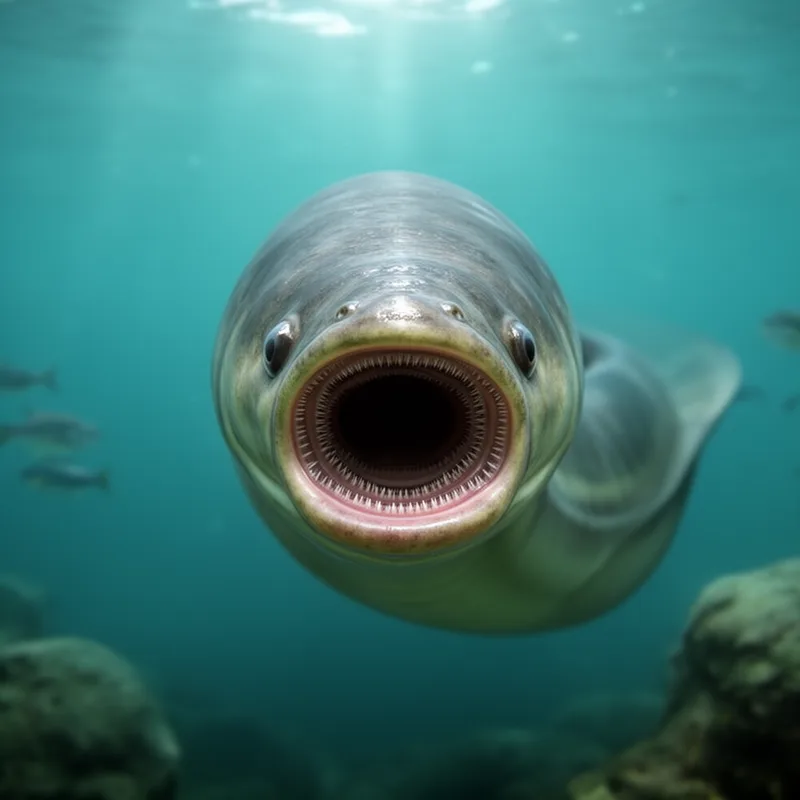
jawless


 1
7.2
1
7.2
- adjective
- /ˈdʒɔːləs/
- Specialized
- However, this reproductive mode is exhibited by some species of all vertebrate classes except the jawless fishes (agnathans) and the birds.
- jawless fish
Examples
-
Lampreys, which are jawless fish that belong to the oldest living lineage of vertebrates, use only a handful of olfactory receptor genes.
Academic text (2002) -
And the jawless ones stretched liver-red tongues that lapped at the window pane.
-
Inside, padded with crumpled paper towels, is a jawless skull.
Academic text (2008) -
Instead, they leave together, dragging Michonne's armless, jawless pet zombies along.
Blog text (4) -
Illustrations (from bottom to top) depict the phylogeny of the splanchnocranium during the evolution of jawless vertebrates to mammals.
Academic text (2003) -
Lampreys are fascinating creatures because they are jawless and have unique feeding habits.
-
The jawless fish known as the hagfish can produce slime to evade predators.
-
Scientists study jawless species to understand the evolution of vertebrates.
Antonyms

Compounds
Surface Forms
Morphology
Etymology
Jawless combines jaw and the ending -less, which means 'without', just like in hopeless. So jawless describes an animal 'without a jaw', for example the lamprey or hagfish.