
isoprene


 1
8.0
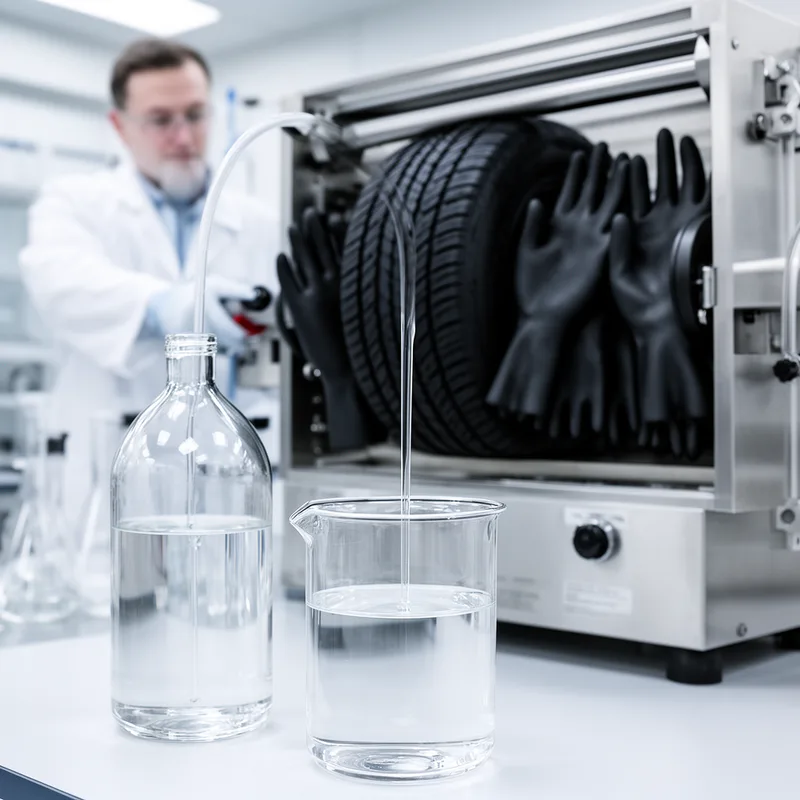
A colorless liquid chemical used to make rubber and other materials
- noun
- /ˈaɪsəˌprin/
- Specialized
:
isopreno
- By contrast, the isoprene polymers that constitute rubber wiggle on a scale much shorter than the typical gap between crosslinks.
Examples
-
In nature, isoprene helps protect leaves from heat stress and influences atmospheric chemistry.
-
Isoprene is an important chemical compound used for making synthetic rubber.
-
The production of isoprene in bacteria is being studied to enhance rubber production.
Surface Forms
Morphology
isoprene = prene (opaque) = iso + prene
The parts are specialised chemical combining forms; a typical B1 learner cannot derive the meaning from 'iso-' + 'prene' without domain-specific knowledge.
Etymology
Isoprene comes from the chemical prefix iso- meaning 'equal' and the ending -prene, which links it to small hydrocarbon groups like terpenes that form rubber and other materials. So think of isoprene as a 'same' small unit that repeats to make natural and synthetic rubber.