

isometry
- noun
- /aɪˈsɒmətri/
- Specialized
- In some species, isometry is observed when their body parts grow at the same rate throughout development.
Examples
-
Comparing isometry and allometry can help scientists understand evolutionary adaptations in morphology.
-
The concept of isometry is crucial in developmental biology.
-
The concept of isometry explains why a young animal may look like a smaller version of the adult, with similar proportions.
-
Is isometry always observed in all organisms?
-
In biology, isometry explains how different parts of an organism grow at the same rate, maintaining their proportions.
-
The study of isometry is important in understanding how animals develop without changing their body shape.
-
Researchers found that isometry in fish allows them to maintain consistent body proportions throughout their growth.
Synonyms
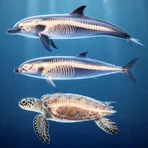
Similarity in shape and structure between different living things
Antonyms

- Specialized


 1
9.9
The study of how parts of a living thing grow compared with the whole body
How Proportional
- Specialized

- Specialized
1
9.9
Surface Forms
Morphology
isometry = isometric (semi-transparent) = iso + metry
Formed by nominalizing the adjective 'isometric' (equal-measure) with a standard noun-forming ending; the term is technical so learners may need domain knowledge.
Etymology
Isometry comes from the Greek parts iso- 'equal' and -metry from metron 'measure'. So in biology it means body parts grow at the same rate and keep the same shape because their measures stay equal as the animal grows.