
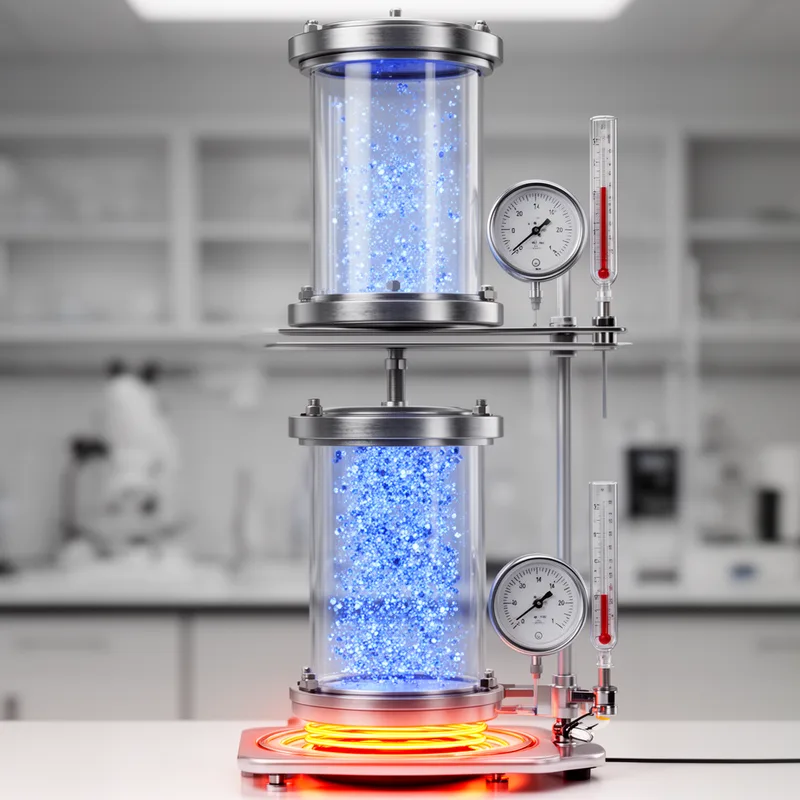
isometric process
- noun
- /ˌaɪsəˈmɛtrɪk ˈprəʊsɛs/
- Specialized
- Heating a gas in a rigid container is a classic example of an isometric process.
Examples
-
In an isometric process, the volume of the gas does not change despite variations in pressure.
-
During the experiment, the scientist observed an isometric process by sealing the system at a fixed volume.
-
An isometric process occurs when the volume of a gas remains constant.
-
The isometric process is crucial in understanding thermodynamics.
-
Heating a gas in a rigid container is a classic example of an isometric process.
-
In an isometric process, the volume of the gas does not change despite variations in pressure.
-
During the experiment, the scientist observed an isometric process by sealing the system at a fixed volume.
Synonyms

A change in a system where the volume stays the same

A process where a sealed container keeps the same volume while pressure or temperature change

A process in which the space a gas takes stays the same while pressure or temperature change
Surface Forms
Morphology
The adjective 'isometric' conveys sameness or preserved measurement and 'process' indicates a sequence of change, so a learner could infer this is a process in which some measurement stays the same. However, the specific thermodynamic meaning (that volume remains constant) is technical and not fully predictable from the general senses of the constituents, making the phrase only partially transparent to a B1 learner.
Etymology
The term isometric process comes from the parts iso meaning 'equal' and metric meaning 'measure', so it gives the image of 'equal measure'. Imagine a gas in a sealed, rigid container whose walls do not move: the 'volume' stays the same while pressure or temperature change. That's why the phrase means 'a process with constant volume'.

