
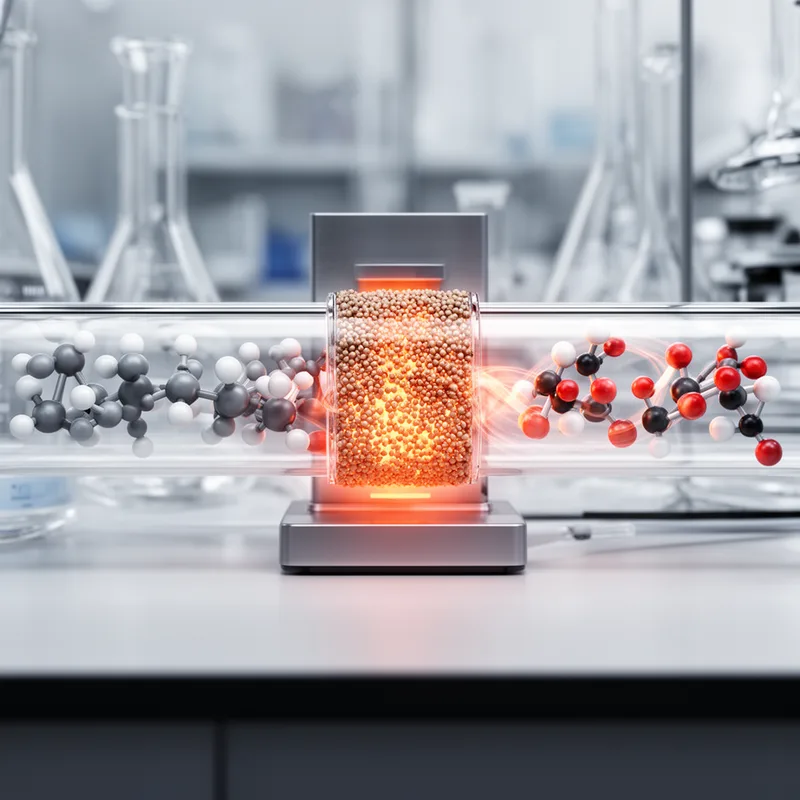
to isomerize
9.9
To change a chemical into another form that has the same atoms arranged differently
- verb
- /ˈaɪsəˌmɪrˌaɪz/
- Specialized
:
isomerizar
- Now we have to isomerize that to a mixture of glucose and fructose and we use glucose isomerase to do that.
Examples
-
To enhance the product's sweetness, manufacturers may isomerize corn syrup into high-fructose corn syrup.
-
In the laboratory, we learned how to isomerize glucose into fructose through a chemical process.
-
Chemists often need to isomerize substances to evaluate their properties in different forms.
Surface Forms
isomerize infinitive
isomerized past
isomerized past participle
isomerizing present participle
isomerizes third person singular
Morphology
Etymology
Isomerize comes from the Greek parts iso- 'equal' and mer 'part', with -ize 'to make'. So to isomerize is to make a molecule that has the same parts, the same atoms, but in a new shape, which is why isomers are different forms of the same compound.

