
isomerization


 1
9.4
- noun
- /ˌaɪsəˈmɛrɪzeɪʃən/
- Specialized
- Combination of saccharification of starch by glucoamylase (pH 4.5-5.5) with isomerization will result in shortening of reaction time and lead to a major saving in terms of equipment cost.
Loading YouTube…
Watch on YouTubeAnd then we saw those new patterns break and the breaking is due to isomerization.
- And then we saw those new patterns break and the breaking is due to isomerization.
Examples
-
For polymer synthesis, isomerization is a key step that alters the arrangement of atoms, affecting the properties of the final product.
-
The isomerization process can then be carried out as a continuous, fixed-bed reactor process.
Academic text (2015) -
But this is isomerization from unstable isomer to a stable isomer.
-
For optimal performance of the isomerization process, the xylose isomerase can be immobilized.
Academic text (2015) -
The isomerization occurs via an anionic transition state formed by the movement of M2 to the position M2' (Fig. 4C).
Academic text (2015) -
The isomerization reaction taking place at 85 to 95°C would permit the direct production of 55% fructose syrups (without the last chromatography step).
Academic text (2015) -
This yeast cannot metabolize D-xylose; however, it can utilize D-xylulose, the isomerization product of xylose (Wang and Schneider, 1980).
Academic text (2015) -
The reaction involves isomerization, where glucose is transformed into fructose in the presence of an enzyme.
-
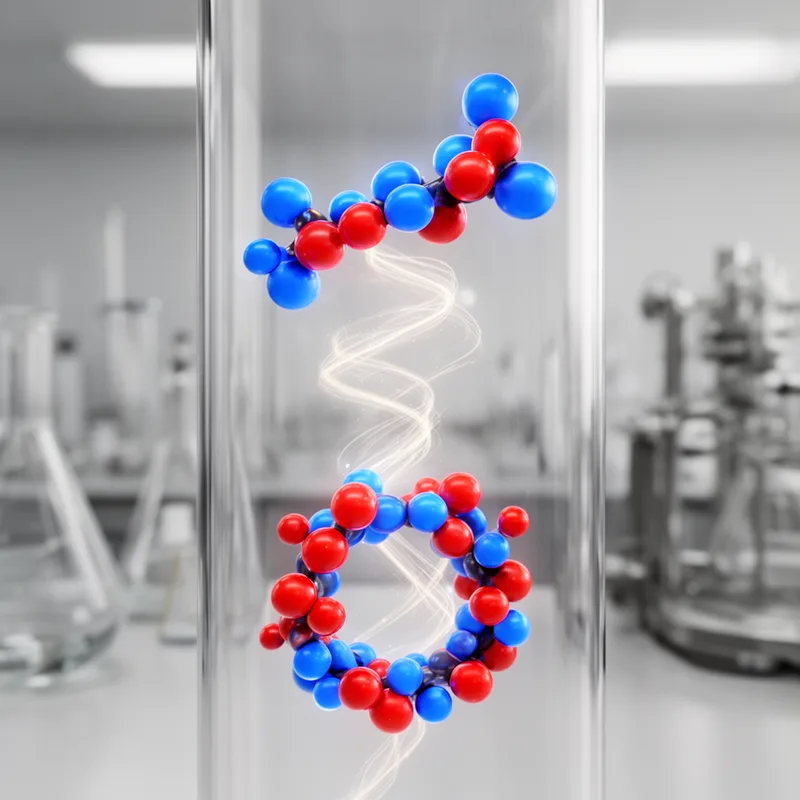
In organic chemistry, isomerization describes how a compound is converted into its isomeric forms without changing its molecular formula.
Surface Forms
Morphology
Etymology
Isomerization comes from the parts iso- ('equal') and -mer ('part'), so an isomer is a molecule with the same parts. Isomerization is the process of changing a molecule into an isomer that has the same parts but a different order, so the word means making the same parts take a new shape.