
isoflavone
 1
7.7

- noun
- /ˌaɪsoʊˈfleɪvoʊn/
- Specialized
- Many studies suggest that isoflavones found in soy products can help manage symptoms of menopause.
- soya isoflavones
- soy isoflavones
Loading YouTube…
Watch on YouTubeIt's got phytoestrogens as well as isoflavones.
- It's got phytoestrogens as well as isoflavones.
Examples
-
The best known are isoflavones from soy products like tofu, tempeh, and soy concentrates and isolates added to many foods.
Academic text (1998) -
OK, So what type of isoflavone and how much should be people taking if they want to get this benefit?
-
The optimum impact was seen for those taking the isoflavones for at least 12 weeks.
Academic text (2012) -
Recommending soya foods, rather than isoflavone supplements alone, can provide multiple health benefits to menopausal women.
Academic text (2012) -
Large clinical studies have examined the potential role of soya-specific isoflavones in the management of hot flushes, reducing their frequency and severity. 12-14
Academic text (2012) -
Major studies have examined the potential role of soya isoflavones in managing hot flushes, since women in Asian countries, where the diet typically contains high amounts of soya, report far fewer hot flushes.
Academic text (2012) -
For subjects who experienced at least five hot flushes per day, a median intake of 54 mg of isoflavones daily for at least 6 weeks reduced hot flush frequency by more than 20% beyond placebo (p < 0.00001).
Academic text (2012) -
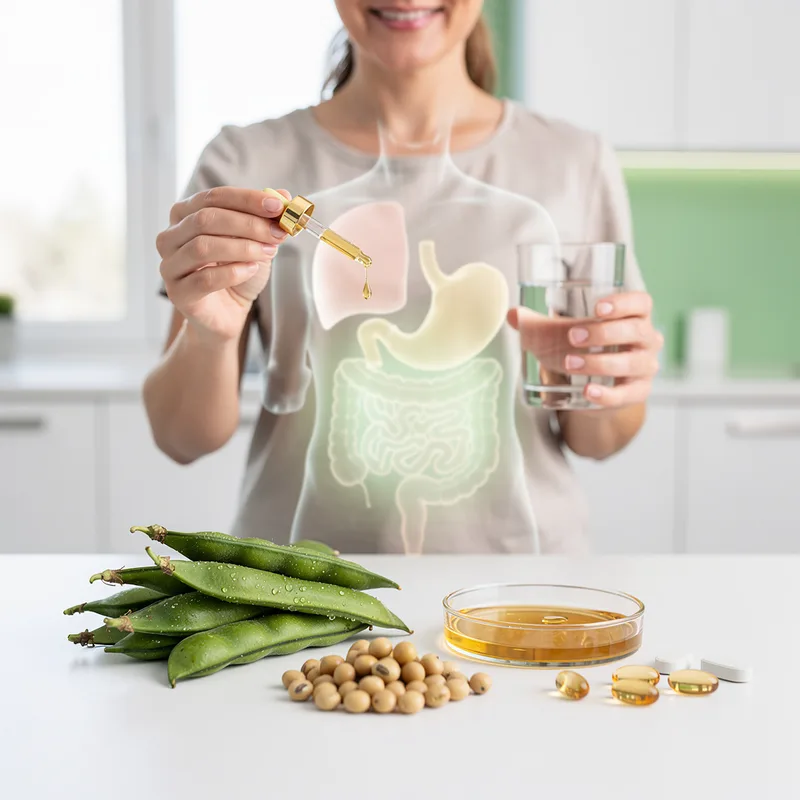
Eating a diet rich in soy can increase your intake of isoflavones, which may offer health benefits.
-
To boost your isoflavone intake, consider adding more tofu and edamame to your meals.
Surface Forms
Morphology
Etymology
The word isoflavone starts with iso- meaning 'same' and ends with flavone, a name for a group of plant chemicals taken from the Latin for 'yellow'. So an isoflavone is a 'same' kind of flavone, a plant compound often found in soybeans and studied for possible health benefits.