
irrigable


 1
4.9
- adjective
- /ˈɪrɪɡəbl/
- Specialized
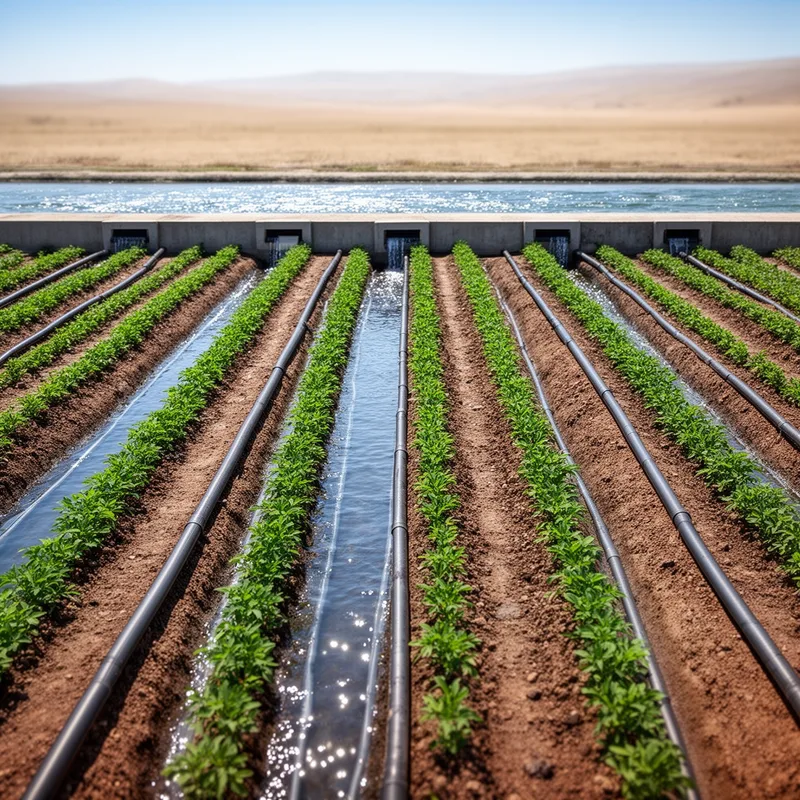
- Farmers are eager to utilize the irrigable fields to improve their crop yields during the dry season.
- irrigable land
- irrigable acres
Examples
-
The Navajo Nation estimated the number of irrigable acres in production on the NNSJRIS in the fall of 2015 in response to the Gold King Mine spill.
Academic text (2018) -
In his 1910 annual report, the superintendent for the Pala Indian School and Agency noted that while agriculture continued to be the chief industry among the Indians, there were only three hundred acres of irrigable land.
Academic text (2000) -
The authorities over Texas specifically allowed anyone to claim one square league (4,438 acres) of irrigable land.
Blog text (34) -
Ethiopia has approximately 2.3 million hectares of irrigable land in its part of the Nile Basin, of which less than 1 percent has been developed.
Academic text (2008) -
In it, he urged that the irrigable regions be divided into small farms, up to 80 acres, and that the farmers work together to develop irrigation systems.
Academic text (2007) -
In addition to excessive out-of-pocket costs for preventable maintenance repairs, the opportunity cost to the NN of not farming irrigable and idle farmland is significant.
Academic text (2018) -
The region's climate makes it suitable for farming, as there are large areas of irrigable land available for cultivation.
-
The government invested in irrigation systems to ensure that more land becomes irrigable for sustainable agriculture.
Surface Forms
Morphology
Etymology
Irrigable comes from the root irrig-, as in irrigate and irrigation, which comes from a Latin word meaning 'to water'. That's why land called irrigable can be given water by pipes, canals, or other systems to help crops grow.