

investigative
 179
5.1
179
5.1

- adjective
- /ɪnˈvɛstɪɡeɪtɪv/
- You should try that news guy who does all those special investigative reports.
- investigative journalism
- investigative reporting
- an investigative journalist
Loading YouTube…
Watch on YouTubeYou know him from his years of investigative journalism.
- You know him from his years of investigative journalism.
- She is a financial expert, investigative journalist.
- Now, they didn't send an FBI investigative team for what, three weeks after the incident?
- Media laws in England and Wales on defamation are notorious amongst investigative journalists.
- There are these huge tones about Watergate and they're great books, great investigative journalism, but they're so complex.
- He actually does some some good investigative work.
- I read the most recent UN report put out by Navi Pillai, the investigative Commission.
- Yeah, we didn't see because we were Scotland Yard's top drug investigative unit.
- About a year and a half ago I was, I had this crazy idea of of making an investigative show about UFOs, UAP.
- Atkinson, an investigative reporter and host of Full Measure with Cheryl Atkinson.
- And that one of my classmates was a Gavin Mcfadgen, who became one of the leading investigative journalists.
- You know, some of the best interviews, some of the best investigative journalism is done by people inside the field.
- But it's being an actor, you have to do investigative work.
- How do we ensure investigative journalism and, and, and quality?
Examples
-
It's called "investigative journalism" for a reason.
-
You know, some of the best interviews, some of the best investigative journalism is done by people inside the field.
-
The White House said he was doing some investigative work.
-
We need to talk before the investigative team is all over this place.
Fiction book (1993) -
You know him from his years of investigative journalism.
-
I am an investigative reporter for The New York Times.
-
I'm an investigative reporter for an L.A. paper.
-
The National Transportation Safety Board had already dispatched an investigative team to the area.
Fiction book (1996) -
The feds flew in an investigative team last night, and now nobody is saying anything.
Fiction book (1999) -
The newspaper published an investigative article uncovering corruption in local government.
Synonyms
 19
3.9
19
3.9
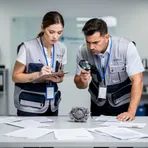
Sent to find out what happened and gather information
 5
6.8
5
6.8
Intended to find facts or information
Antonyms


How Investigative
- Specialized
171
6.1

- Formal
1
7.1
179
5.1
- Formal
5
6.8
Surface Forms
Morphology
investigative = investigate (transparent) = investigate + ive
The adjective is transparently formed from the verb 'investigate' with the common suffix '-ive', meaning relating to or characterized by investigation.
Etymology
Investigative comes from Latin parts in- ('in') and vestigare ('to track' or 'follow a trail'), and the root vestig means 'trace', as in the word vestige. So an investigative report or team 'looks into' the traces and follows clues to find the facts.