
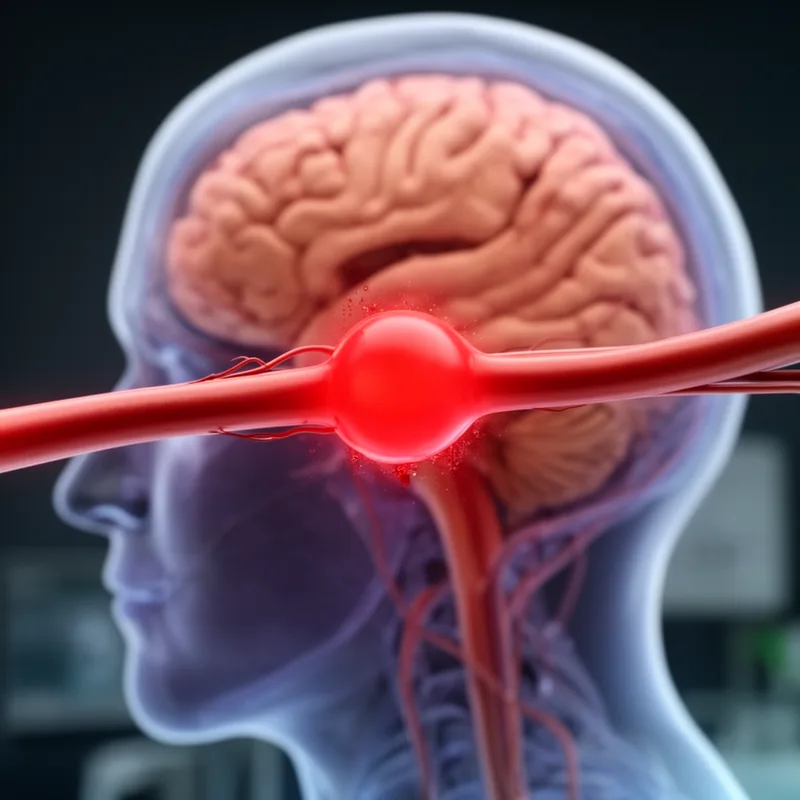
intracranial aneurysm
- noun
- /ˌɪntrəˈkreɪniəl ˈæn.jʊr.ɪ.zəm/
- Specialized
- Detecting an intracranial aneurysm early can be lifesaving and prevent a potential brain hemorrhage.
Examples
-
Symptoms of an intracranial aneurysm can include severe headache, vision problems, or loss of consciousness.
-
The surgeon explained that the patient had an intracranial aneurysm that required urgent treatment.
-
An intracranial aneurysm can be life-threatening if it ruptures.
-
Doctors diagnosed her with an intracranial aneurysm last week.
-
Detecting an intracranial aneurysm early can be lifesaving and prevent a potential brain hemorrhage.
-
The surgeon explained that the patient had an intracranial aneurysm that required urgent treatment.
-
Symptoms of an intracranial aneurysm can include severe headache, vision problems, or loss of consciousness.
Synonyms


 1
6.7
1
6.7
A weak bulge in a brain artery that can burst and cause bleeding
Surface Forms
Morphology
The meaning is directly compositional: 'intracranial' (inside the skull) + 'aneurysm' (a bulging artery) yields a bulging/dilated artery located within the cranial cavity. Despite being technical medical vocabulary, the semantic relation is literal and mirrors similar compound constructions in other languages, so a learner who knows both constituents can infer the meaning.
Etymology
Intracranial aneurysm breaks into parts: intra- means 'inside', cranial means 'skull', and aneurysm means a 'bulge' or small balloon in an artery. Imagine a tiny balloon forming on a thin pipe inside the head; if it 'bursts' it causes very serious problems, so the name explains a dangerous 'bulge' inside the skull.