
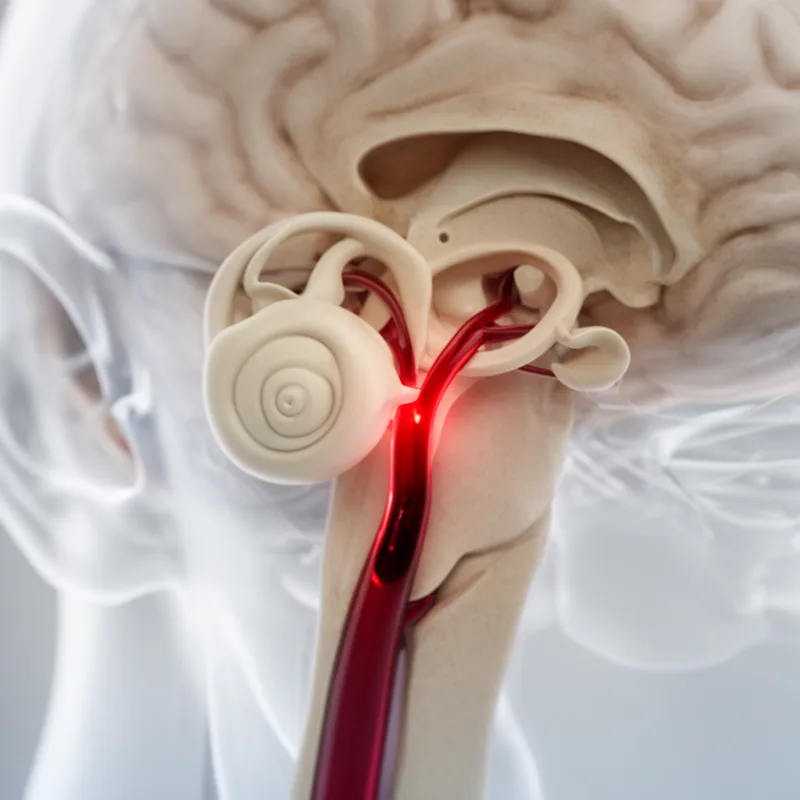
internal auditory artery
- noun
- /ɪnˈtɜrnəl ˈɔːdɪtɔri ˈɑrteri/
- Specialized
- Compromise of the internal auditory artery may lead to hearing loss and balance disturbances.
Examples
-
During the operation, the surgeon carefully avoided the internal auditory artery to prevent damaging the patient's inner ear.
-
The internal auditory artery can be visualized during advanced MRI scans of the brainstem region.
-
The internal auditory artery is crucial for hearing.
-
Surgeons must be careful not to damage the internal auditory artery during operations.
-
During surgery, the doctor was careful to trace the internal auditory artery to avoid complications in the patient's hearing.
-
Damage to the internal auditory artery can result in serious issues such as tinnitus and vertigo.
-
The internal auditory artery is essential for providing blood flow to the structures of the inner ear.
Synonyms

A small blood vessel that carries blood to the inner ear

A blood vessel that carries blood to the inner ear
Surface Forms
Morphology
Each constituent directly contributes to the meaning: 'internal' = within, 'auditory' = relating to hearing, and 'artery' = a blood vessel, so the phrase denotes a blood vessel located in the hearing apparatus. Although the term is technical, its structure is fully compositional and parallels naming patterns in other languages, so a B1 learner who knows the words can reasonably infer the meaning.
Etymology
Internal auditory artery is a simple medical name that tells what and where it is. The artery is a blood vessel that runs internal toward the auditory part of the ear and 'supplies' blood to the inner ear, so the name describes its location and job.

