
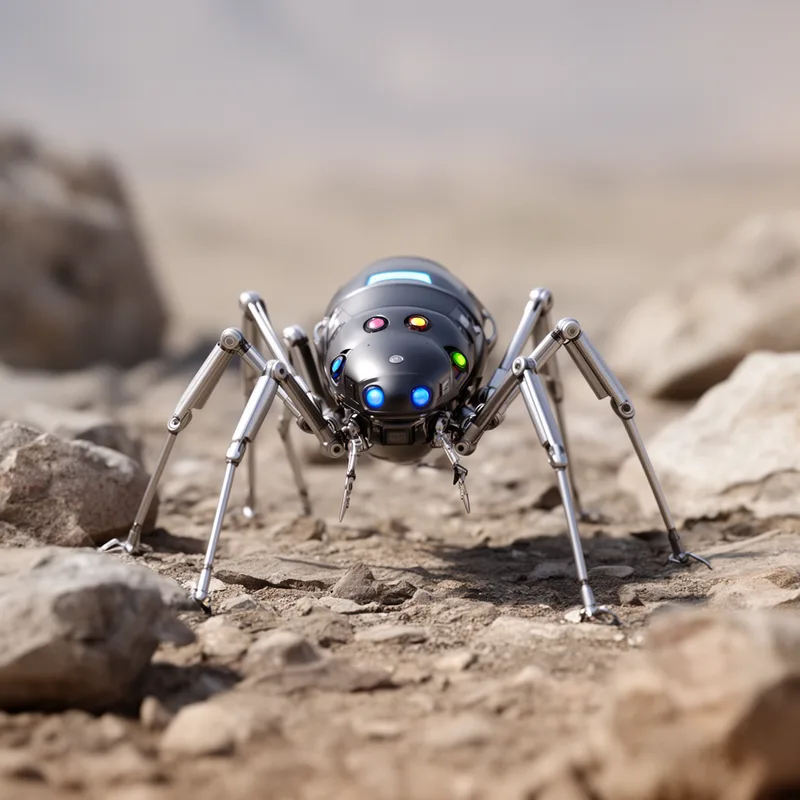
insectile


 1
7.5
1
7.5
- adjective
- /ɪnˈsɛktaɪl/
- His helmet depicted some insectile god with large compound eyes and sawtoothed mouthparts.
Examples
-
The artist's sculpture was inspired by insectile forms, capturing their unique movement and structure.
-
You see, by 1881 his group had insectile flying machines.
-
Skittering, insectile motion at one end heralds the aliens, as two of them crawl rapidly along.
Fiction book (1997) -
The insectile alien joined the group of Canterbury pilgrims, as the tourists liked to be called, just before the tour reached the Martyrdom.
Fiction book (1995) -
Digit whirred and clicked as he scuttled out of his corner and balanced on his long insectile legs near the end of the bed.
Fiction book (2000) -
The alien creatures had an insectile appearance, with shiny exoskeletons and multiple legs.
-
The sound of many small wings beating created an insectile rhythm in the quiet garden.
Synonyms
 3
7.1
3
7.1
Looks like an insect with many legs and a hard body

Having the look or movement of an insect
Relating to insects or their bodies and habits

Relates to insects such as ants or bees
How Insect-Like
1
7.5

Surface Forms
Morphology
Etymology
Insectile comes from the word insect plus the ending -ile, which means 'like' or 'related to'. So insectile means 'like an insect', which is why we use it for things that look or move like insects.