
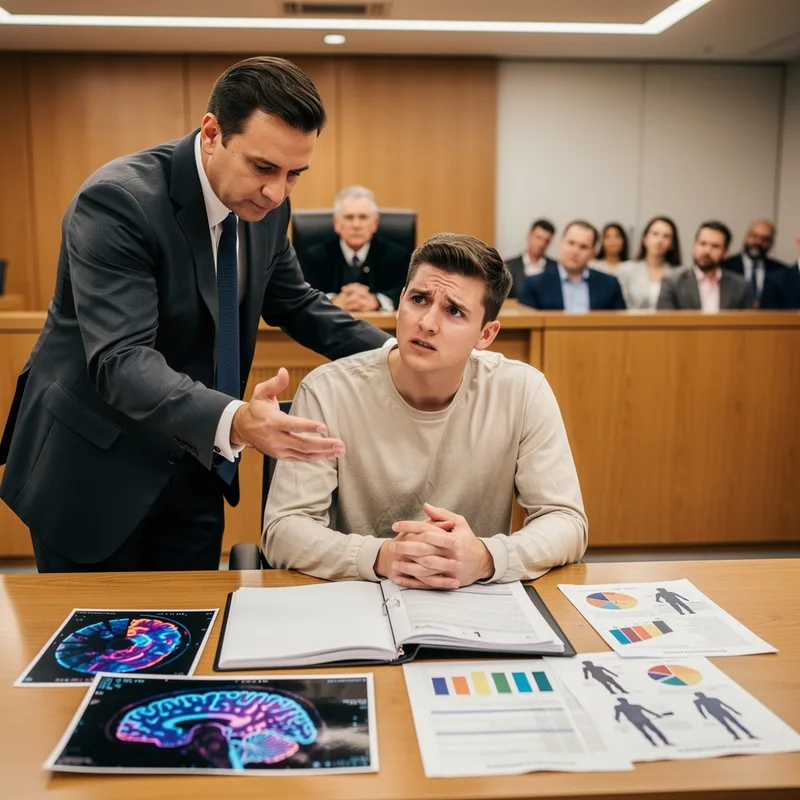
insanity plea
 6
7.3
6
7.3

- noun
- /ɪnˈsænɪti pli/
- Formal
- In court, the judge explained the requirements for an insanity plea before deliberating on the case.
Examples
-
The defendant's lawyer argued that an insanity plea was necessary due to his mental illness at the time of the crime.
-
Is this laying the groundwork for a not guilty by reason of insanity plea?
-
All he can do is get me out of here on an insanity plea.
-
You know I should have defended you with an insanity plea.
-
In all murder trials, it seems the insanity plea only makes up 1 percent overall.
-
Now, as an expert in the area of the insanity plea... ...what do you recommend we do?
-
Or do you think he was just angling for an insanity plea?
-
But he copped an insanity plea.
-
Judge Stanley Stern will issue his ruling on alleged killer Emil Slovak's insanity plea.
-
They have seemingly already declared him guilty and are releasing evidence, including video, which will determine whether Holmes will be able to use the insanity plea.
Blog text (29)
Synonyms
 1
8.4
1
8.4
A claim that a person is not to blame for a crime because of mental illness
How Plausible

Surface Forms
Morphology
The meaning is directly derivable from the constituents: 'insanity' (mental disturbance) + 'plea' (a formal legal claim) yields a plea based on insanity claiming lack of responsibility due to mental illness. This noun–noun/legal phrase pattern is transparent and cross-linguistically common, so a B1 learner who knows both words should be able to infer the MWE's meaning.
Etymology
Insanity plea is a phrase from the courtroom. A plea is a formal answer and insanity means a sick mind, so someone tells the court they were 'not responsible' for the crime because their mind was ill.