
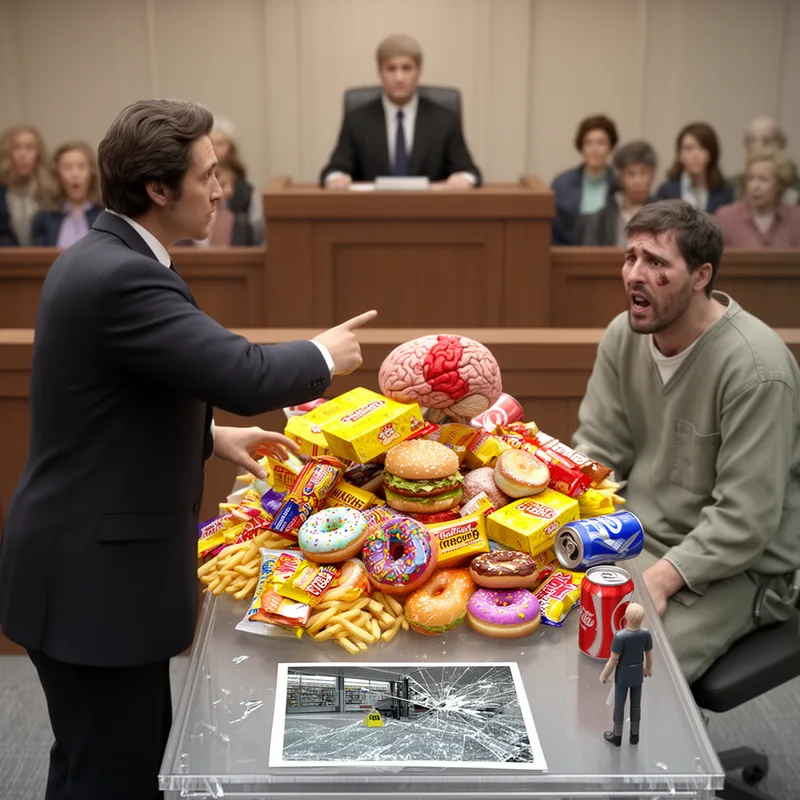
Twinkie defence
- noun
- /ˈtwɪŋki dɪˈfɛns/
- Jargon
- The lawyer successfully used the Twinkie defence to show that his client was not fully responsible for the crime due to emotional distress.
Examples
-
The lawyer argued the Twinkie defence to explain his client's actions during the trial.
-
Many people criticized the use of the Twinkie defence as an excuse for serious crimes.
-
He referenced the Twinkie defence when discussing unusual legal strategies.
-
The Twinkie defence is controversial.
-
Can the Twinkie defence really excuse criminal behavior?
-
Critics argue that the Twinkie defence undermines the seriousness of criminal responsibility in the courtroom.
-
In his closing statement, the attorney explained the Twinkie defence as a unique method to argue for leniency based on mental health issues.
How Plausible


Surface Forms
Morphology
The constituents 'Twinkie' and 'defense' give a clear clue that this is a legal plea involving Twinkies, so parts of the meaning are inferable; however the conventionalized sense — a culture-specific tactic blaming junk-food consumption or similar trivial circumstances to reduce responsibility — is not predictable from the words alone. A B1 learner who knows the two words would likely guess it involves Twinkies and a legal defence but would not reliably infer the full idiomatic/legal meaning without prior exposure.
Etymology
Twinkie defence comes from a famous court case where a lawyer pointed to the defendant's sudden heavy eating of Twinkies, small sweet cakes, as a sign he was very depressed and less able to control his actions. People remembered the odd image of blaming a snack, so today Twinkie defence means using a strange or unlikely excuse to 'avoid full responsibility'.