
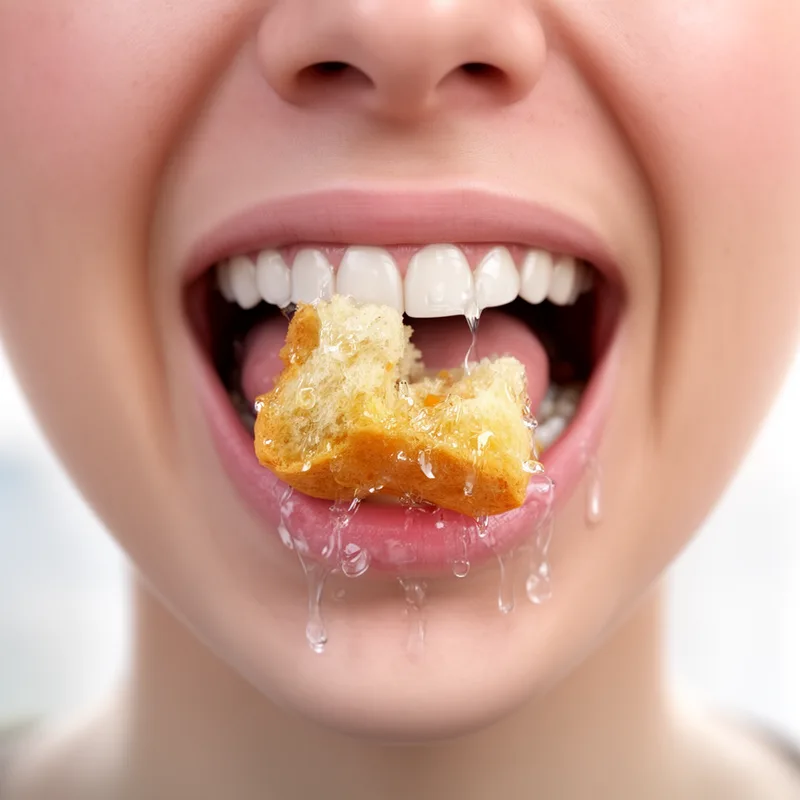
to insalivate


 1
9.9
Wet food with saliva while you chew it
- verb
- /ˌɪnˈsælɪˌveɪt/
- Specialized
:
humedecer con saliva
- As he chewed the delicious food, his mouth began to insalivate, helping him to swallow it more easily.
Examples
-
The snakes insalivate their prey and swallow it whole; that's what his father had told him.
Fiction book (2002) -
The chef demonstrated how to insalivate the ingredients before cooking to enhance the flavors.
-
During the cooking process, the heat causes the meat to insalivate, making it tender and juicy.
Synonyms
to chew
vsto insalivate
407
1.0
To bite and grind food with your teeth to make it soft enough to swallow
focuses on moistening food with saliva rather than mainly grinding

9.9
To chew food with the teeth
is about moistening food with saliva while teeth work rather than a formal term
How Moist

Surface Forms
insalivate infinitive
insalivated past
insalivated past participle
insalivating present participle
insalivates third person singular
Morphology
Etymology
Insalivate is made of in- ('in' or 'into') plus saliva ('mouth liquid'), so it can be thought of as 'to moisten with saliva' as happens when you chew and mix food with your mouth liquid. That's why insalivate is used for mixing or moistening food with saliva before swallowing.