

inorganic
 13
4.7
13
4.7

- adjective
- /ˌɪnɔrˈgænɪk/
- Specialized
- The use of inorganic fertilizers can significantly enhance crop yields in agriculture.
- inorganic nitrogen
- inorganic arsenic
- inorganic carbon
Loading YouTube…
Watch on YouTubeNow with cyborgs or with inorganic entities, this is no longer true.
- Now with cyborgs or with inorganic entities, this is no longer true.
- But here Hagel reverts to talking about inorganic nature.
- It gets cleaved to ADP, adenosine diphosphate plus an inorganic phosphate, right?
- In fact, you could get organic life like maggots from iron and like inorganic compounds.
- Now, one of the reasons that I'm kind of a bit non carbon is because I am an inorganic scientist.
- Across the globe there are thousands of them, varying in shape and detail, but all of them grey, angular, inorganic, spreading.
- We are organic animals and an inorganic digital system which is increasingly controlling and shaping the entire world.
- Then you have complex inorganic molecules, then you get to organic molecules, complex organic molecules, and then you have RNADNA, etcetera.
- He says the inorganic inner is a simple inner.
- So he says, the shape is in one aspect turned against its inorganic nature, right?
- I think that it gets back to when the filmmaking turns inorganic.
- So just really curious that the organic inorganic are mixed in this way for both authors.
Examples
-
The exposure to inorganic arsenic from food and inhaled air and its absorption are not fully investigated.
Academic text (2008) -
Generally speaking, systems using reverse osmosis remove substantial amounts of most inorganic chemicals, including lead.
Academic text (1994) -
But once you switch from organic to inorganic, it becomes much easier.
-
We're really becoming very close to understanding the key steps how we can transform inorganic dead matter into living matter.
-
Biological and inorganic matter detected.
-
We are organic animals and an inorganic digital system which is increasingly controlling and shaping the entire world.
-
Loads with 20 percent or less inorganic content will pay $66/ton.
Academic text (1999) -
Plants and microorganisms compete for the inorganic nitrogen needed by both communities for biosynthesis and growth.
Academic text (1994) -
Hydrofluoric acid (HF) is an inorganic acid commonly used in many domestic and industrial settings.
Academic text (2015) -
Epidemiologic studies have mostly evaluated inorganic arsenic, which is more toxic than organic arsenic.
Academic text (2012)
Synonyms
 1
6.7
1
6.7
Not living parts of an environment, like sunlight and temperature
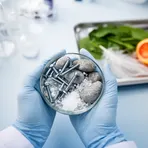
Not made from plants or animals

Not made by or connected to living things
Antonyms
Compounds
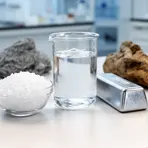

- Specialized

 1
4.2
1
4.2
The study of materials like metals and salts not based on carbon

- Specialized
A salt containing phosphorus but not carbon, found in living bodies, soil, or factories
How Carbonaceous
- Specialized

- Specialized
2
9.1
- Specialized
2
7.4
- Specialized
13
4.7
Surface Forms
Morphology
Etymology
Inorganic breaks down into the prefix in- meaning 'not' and organic, which comes from words for 'organ' and 'organism' meaning 'living things'. So inorganic means 'not from living things', and in chemistry it describes materials like rocks or metals that are not made from living matter.