
to inoculate
 1
7.5
1
7.5

- verb
- /ɪˈnɑkjʊˌleɪt/
- Specialized
 :
inocular con
:
inocular con
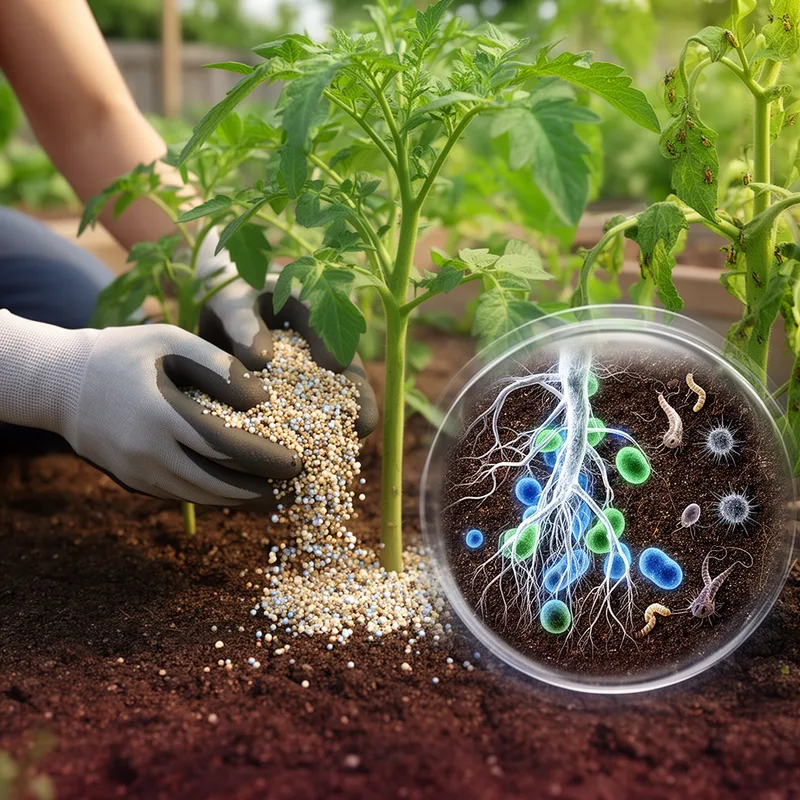
- To improve plant health, gardeners inoculate the soil with helpful bacteria that boost growth.
- inoculate plants
Examples
-
You can take a couple really big heaping scoops of compost and that will actually help to inoculate a new pile.
-
It's just a good bag of pro mix with mycorrhiza inoculated inside of it.
-
When we inoculate with finished compost, the process gets going in one day.
Academic text (1998) -
A second is to inoculate sterilized soil with beneficial microorganisms after treatment.
Academic text (2000) -
And we can inoculate the Mars jar with terrestrial microbes, bacteria let's say.
-
Rich in bacteria, the mash helps to inoculate the young birds' developing crops with important fermenting microbes.
Academic text (1992) -
Northern flying squirrels renew or establish new fungal communities and inoculate young, developing forests with epiphytes, fungi, or other ecologically important organisms.
Academic text (2012) -
And for two years, Nippon Delmonte Corp. of Tokyo has successfully marketed satellite-inoculated tomato seedlings in Japan.
Academic text (1996) -
Farmers often inoculate their crops with beneficial microbes to prevent pests and diseases.
-
They decided to inoculate their vegetable garden with natural agents to keep the plants healthy.
Phrasal Verbs
 3
6.8
3
6.8
Protect a person from harm, often by giving a vaccine or preparing them to resist bad ideas
Surface Forms
Morphology
inoculate = in + ocul + ate
The sense of introducing microorganisms to protect plants is an extension of the medical/grafting sense and cannot be reliably derived from the visible morphemes by an average learner.
Etymology
Inoculate comes from Latin parts in- 'in' and oculus 'eye', first used for putting a small 'eye' or bud into a plant. By extension, gardeners came to use it for putting tiny helpful living things into soil or plants to protect them, which is why to inoculate a garden means to add organisms that help plants fight disease.