
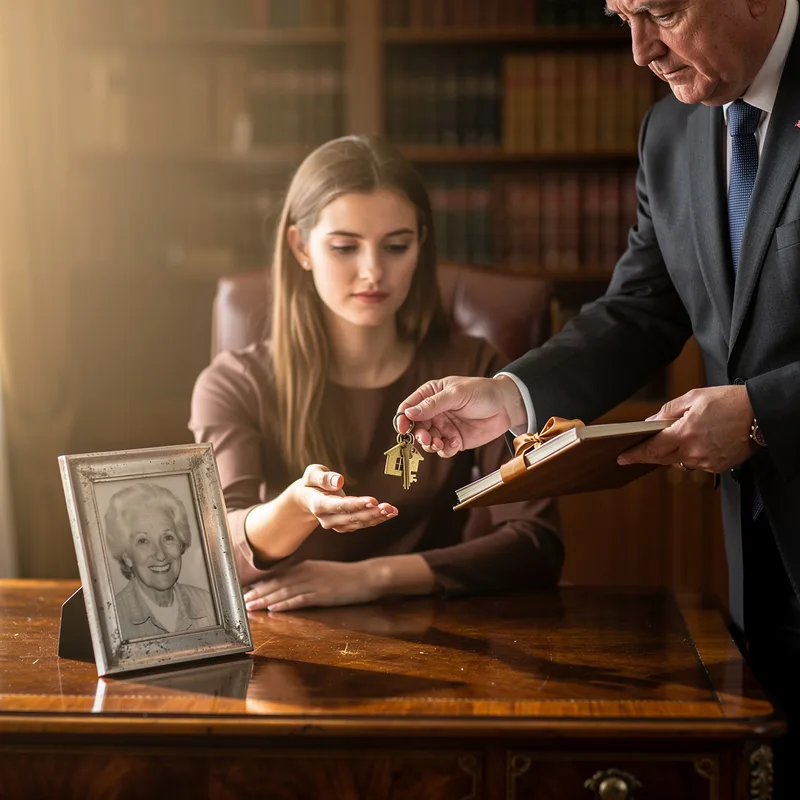
to inherit
 162
3.6
162
3.6

- verb
- /ɪnˈhɛrɪt/
- Whatever that teaching involved, Mary had inherited her father's fascination with astronomy.
- inherit property
- sons inherit
- inherit land
Loading YouTube…
Watch on YouTubeI don't mean your lucky friend who inherited his grandmother's money.
- I don't mean your lucky friend who inherited his grandmother's money.
- Now, Alexander is going to inherit all this when his father dies.
- His son seems to have inherited most of his literary works.
- They're going to inherit this mess.
- And then that that son will inherit a portion of land.
- We are the mammals, we are the meek, but we inherit this planet.
- And he kind of had an office for show because he had inherited a bunch of money.
- The best case scenario is that my great, great grandkids inherit this.
- And she lit all the candles and filled the barn with light and obviously inherited the Kingdom.
Examples
-
When Parker took office in 2009, she inherited soaring budget deficits.
Academic text (2017) -
His son seems to have inherited most of his literary works.
-
It's the one thing I inherited from my father.
-
Yeah, I inherited some money from a dead uncle of mine.
-
Now, Alexander is going to inherit all this when his father dies.
-
When he died, his son inherited his father's crown and debts.
-
I inherited the farm.
-
He'd already begun taking over the responsibilities of running the property he'd inherited from his father.
Fiction book (1994) -
After his grandfather passed away, he will inherit the family estate along with its responsibilities.
-
When she turns eighteen, she will inherit her aunt's jewelry collection, which has been passed down through generations.
Antonyms
How Acquired

Surface Forms
Etymology
Inherit comes from the root herit, which means 'to receive' and is the same part you see in heir and heritage. That's why to inherit money or a house is to 'receive' them from someone who had them before, often after they die.