
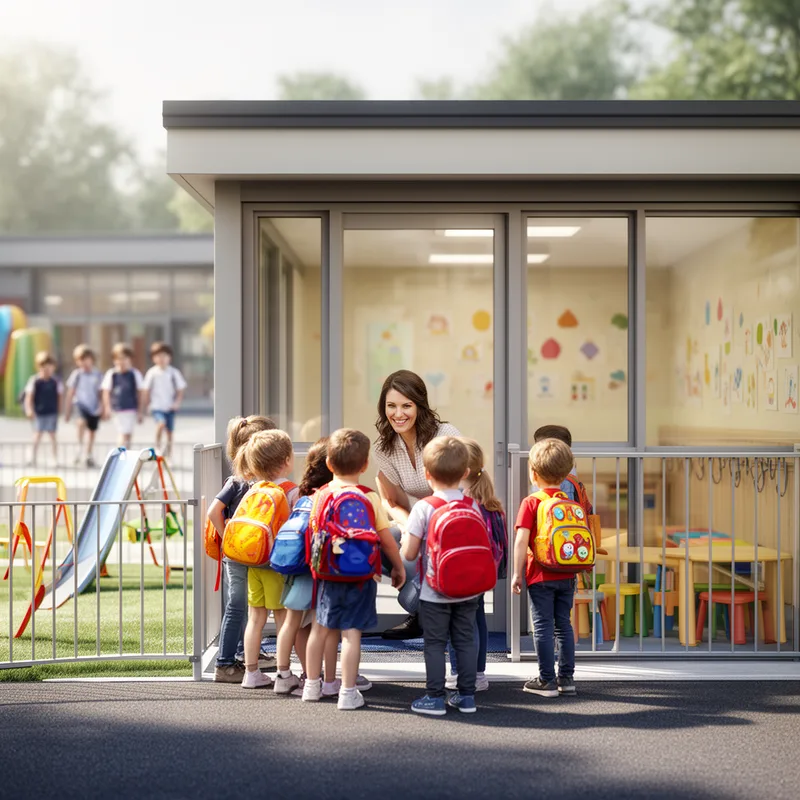
infant school
- noun
- /ˈɪnfənt skuːl/
- UK
- The infant school provided a nurturing environment for young children to begin their education.
Examples
-
In England, children start their education at infant school when they are five years old.
-
I was in infant school.
-
We will maintain funding for free Infant School meals, protect rates for the pupil premium and increase the cash in the dedicated school grant.
-
The Widow Etcheverrigaray's son soon revealed himself to be a clever and hard-working scholar, first at the village infant school, then in middle school at Mauleon, later at the lycée at Bayonne, and finally at university in Paris.
Fiction book (2000) -
Her son learned to read and write during his time at infant school.
How Old


Surface Forms
Morphology
The meaning is largely compositional: combining 'infant' (young child) with 'school' naturally yields 'a school for very young children,' so a B1 learner who knows both words will grasp the general idea. However, the specific UK institutional sense (the precise age range 5–7) and the shifted educational use of 'infant' are not fully predictable from the constituents, so the expression is not completely transparent.
Etymology
Infant school comes from the word infant, which means 'young child'. It was used for the first stage of primary education, so the name literally means a school for the youngest pupils and today refers to schools for five- to seven-year-olds.