

incubation
 3
4.9
3
4.9

- noun
- /ˌɪŋkjʊˈbeɪʃən/
- Specialized
- Eaglets emerge following about 35 days of incubation and fledge after three months in the nest.
- incubation for 72 hours
- incubation period
- incubation temperature
Loading YouTube…
Watch on YouTubeThey know that incubation helps and mother can be a powerful incubator.
- They know that incubation helps and mother can be a powerful incubator.
Examples
-
A fertilized hen egg, for instance, given the proper environment and time for incubation, will become a chicken.
Academic text (1990) -
Candling the eggs midway through the incubation period is a good idea.
-
This must be their incubation chamber.
-
The incubation times were selected in order to obtain early and late incubation times.
Academic text (2018) -
And the warmer temperatures speed up the incubation rate inside the mosquito.
-
Patagonian penguins are traveling farther north during incubation than they did a decade ago.
Academic text (2008) -
Each year during incubation, Patagonian penguins forage hundreds of kilometers north of their nest at Punta Tombo.
Academic text (2008) -
The clutch consists of three or four eggs; incubation takes about a dozen days.
Synonyms
 1
7.3
1
7.3
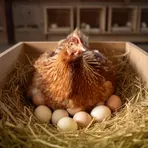
Sitting on eggs to keep them warm until they hatch
Compounds


How Controlled

Surface Forms
Morphology
Etymology
Incubation comes from the Latin incubare, made of in- 'on' and cubare 'to lie down'. Think of a mother hen 'sitting on' her eggs to keep them warm; that 'sitting on' is incubation, the process that lets eggs develop.