
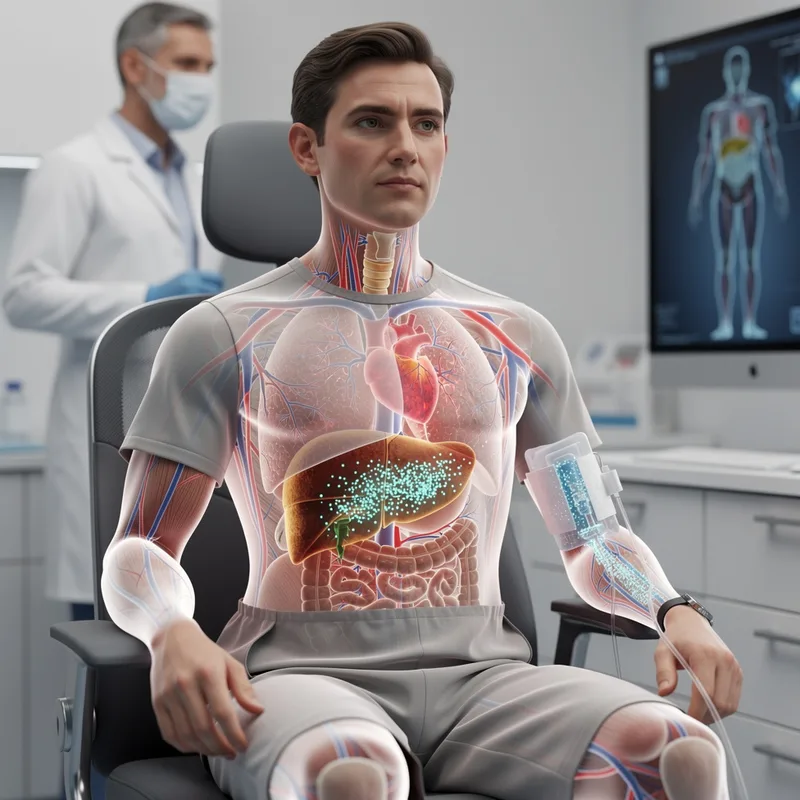
in vivo
 6
5.9
6
5.9

- adjective
- /ɪn ˈviːvoʊ/
- Specialized
- We know that exercise can have some effects on senescent cells in vivo, but we don't know how it works.
- in vivo studies
- in vivo testing
- tissue in vivo
Loading YouTube…
Watch on YouTubeAnd usually scientists and journalists refer to these live cell or in vivo visualizations as movies.
- And usually scientists and journalists refer to these live cell or in vivo visualizations as movies.
- And actually we have been generating functioning islets slowly in vivo from fetal donors.
- It could just be a structure that's not, not in vivo, so to speak, That's, you know, that's outside the body.
- And this we proposed would drive to this state when we inject in vivo and and promote lymph node trafficking.
- So we first have to understand how we actually do it in vivo, how embryo does this first cell fate decisions.
- But then the translation is to what extent can you actually translate this to supplement use or stimulation in vivo?
Examples
-
Finally, we examined the relevance of these findings to TGF-mediated nerve regeneration in vivo.
Academic text (2017) -
Here we show that autophagy is essential for normal neutrophil differentiation in vivo.
Academic text (2017) -
Yes, we do quite a bit of in-vivo research.
-
The company is only six months old, and we are making great progress towards in vivo testing.
-
And this was in vivo in rodents, she wrote in her notes.
-
And actually we have been generating functioning islets slowly in vivo from fetal donors.
-
Autophagy is essential for in vivo neutrophil differentiation in a cell-intrinsic manner.
Academic text (2017) -
Results showed that ASC-J9 could be quickly absorbed in vivo and had a relatively slow elimination half-life of 5.45 hours.
Academic text (2017) -
For measurement of lung mechanics in vivo, mice were anesthetized, tracheotomized, and mechanically ventilated.
Academic text (2013) -
The researchers conducted an important study on drug effects in vivo using live animals.
Synonyms

Happening inside a living body
Antonyms

How Natural


Surface Forms
Morphology
in + vivo
The preposition 'in' gives a clear locative clue, but 'vivo' is a Latin form (not a common English word) so an average B1 learner who only knows basic English vocabulary is unlikely to derive 'inside a living organism' from the parts alone. However, the phrase is frequently used in scientific contexts and 'vivo' has transparent cognates in many Romance languages (and links to forms like 'vital'/'viv-'), so learners with some cross-linguistic knowledge or exposure to science can often infer the meaning, making it partially but not fully transparent.
Etymology
In vivo is made of in and vivo, and it literally means 'inside a living body'. Scientists use in vivo to say a test or experiment was done in an animal or person, not in glass, so it means 'happening inside a living organism'.