
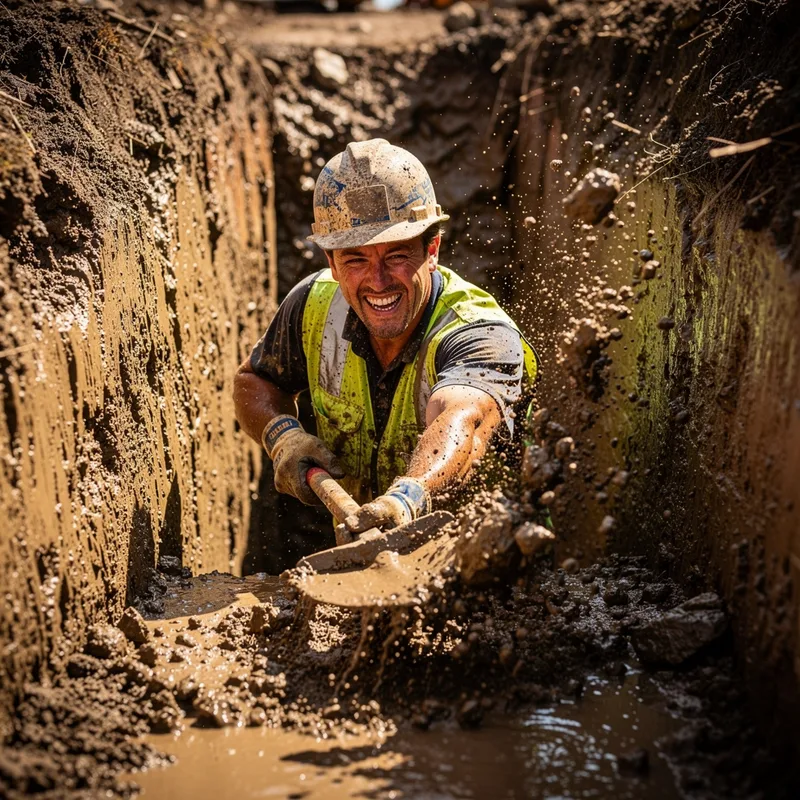
in the trenches
 27
7.2
27
7.2

- idiom
- I've been in the trenches with my team, working day and night to meet the project deadline.
- work in the trenches
- experience in the trenches
- workers in the trenches
Loading YouTube…
Watch on YouTubeThe best way to survive and cope in the trenches was to suppress all grief.
- The best way to survive and cope in the trenches was to suppress all grief.
- So while I'm still part of Fit Body Boot Camp, I'm not in the trenches with them doing this.
- But having having partners in the trenches with us is really, really important.
- But this is someone who's actually been a real operator in the trenches.
- It's when you're passionate about something, you're figuring it out, you're in the trenches.
- I want to sort of talk about or OfferUp some tips that I've gathered along the way in the trenches of independent film making.
- But we we do have skills that other people don't when we're down in the trenches, and I think it's our responsibility to keep working.
- That's great from a God's eye view with all of the perspective of not having to be in the trenches.
- And you know, she's been in the trenches with this brand, like, you know, thick or thin, I'm sure seen horrible times.
Examples
-
So I'm excited, I'm inspired, I'm hopeful, and I'm in the trenches working.
-
Their whole lives have been shaped by being in the trenches together, and that makes for deep bonds.
Blog text (13) -
But having having partners in the trenches with us is really, really important.
-
You asked to be in the trenches, David.
-
I think I was better off in the trenches.
-
- It's tough in the trenches.
-
We're in the trenches together.
-
So let's get in the trenches.
-
There is certainly a great deal of work to be done, and there are many brave people fighting in the trenches to change these systems.
-
I've been in the trenches with my people, not just talking.
Antonyms


How Involved
29
4.3
 27
7.2
92
3.9
79
3.5
4
6.8
27
7.2
92
3.9
79
3.5
4
6.8
- Informal
103
3.5
Surface Forms
Morphology
The phrase is a metaphorical extension of the literal 'trench' (a defensive ditch) so knowing 'in' + 'the' + 'trench' gives a clue of being 'on the front line' or in a difficult position. However, the specific workplace sense ('doing the hard, day-to-day work') is idiomatic and culturally grounded in war metaphors, so a B1 learner would only partially infer the exact meaning without prior exposure.
Etymology
In the trenches comes from war, where soldiers lived and fought inside muddy trenches near the front line. Because those soldiers did the most dangerous, hard work, today saying someone is in the trenches means they are 'directly involved in the most difficult part of a job or situation'.