
impassably
- adverb
- /ɪmˈpæsəblɪ/
- The river had flooded its banks, making the fields impassably muddy for vehicles.
Examples
-
Thick fog and fallen branches rendered the hiking trail impassably dangerous.
-
After the storm, the river overflowed its banks, making the road impassably submerged.
-
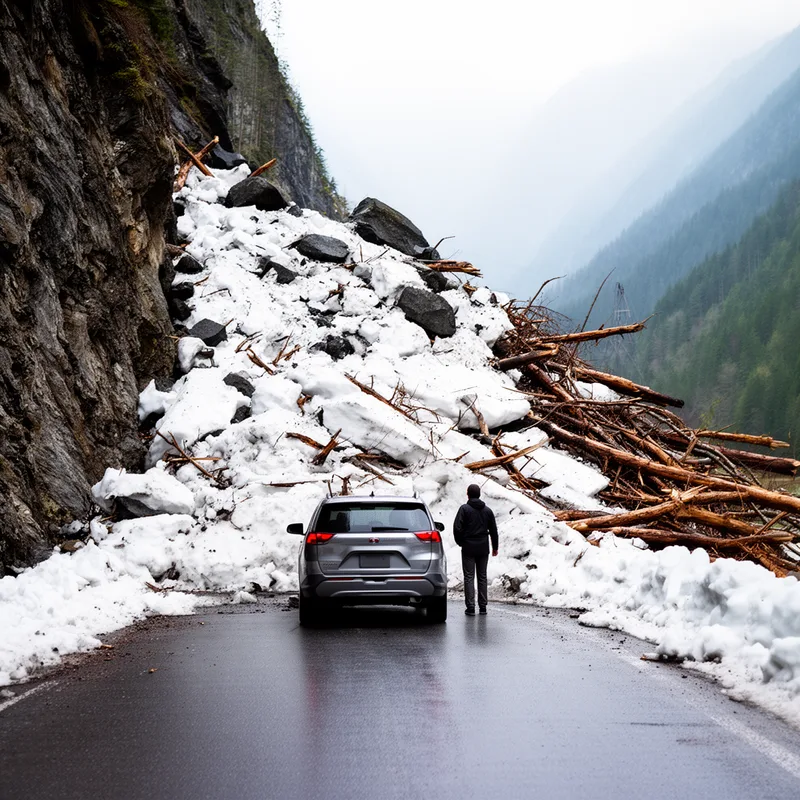
After the heavy snowfall, the mountain road was impassably blocked for several days.
-
The road was impassably blocked by fallen trees.
-
They found the river impassably wide after the storm.
-
Due to heavy snowfall, the mountain pass remained impassably blocked for days, preventing any travel.
-
The dense forest was so impassably thick that no one could find a way through it.
Synonyms

 1
8.9
1
8.9

Impossible to go through or understand


 1
8.8
1
8.8
In a way that cannot be overcome

In a way that cannot be overcome

In a way that no one can defeat or capture

In a way that cannot be defeated

So hard to reach that few people can get to it
Antonyms


Surface Forms
Morphology
impassably = impassable (transparent) = im + pass + able + ly
Standard adverb formation from the adjective 'impassable' using the productive suffix '-ly'.
Etymology
Impassably comes from the prefix im- meaning 'not' and the root pass meaning 'to go by', the same root you see in passage and the verb pass. So something described as impassably blocked cannot be 'passed' or crossed.