
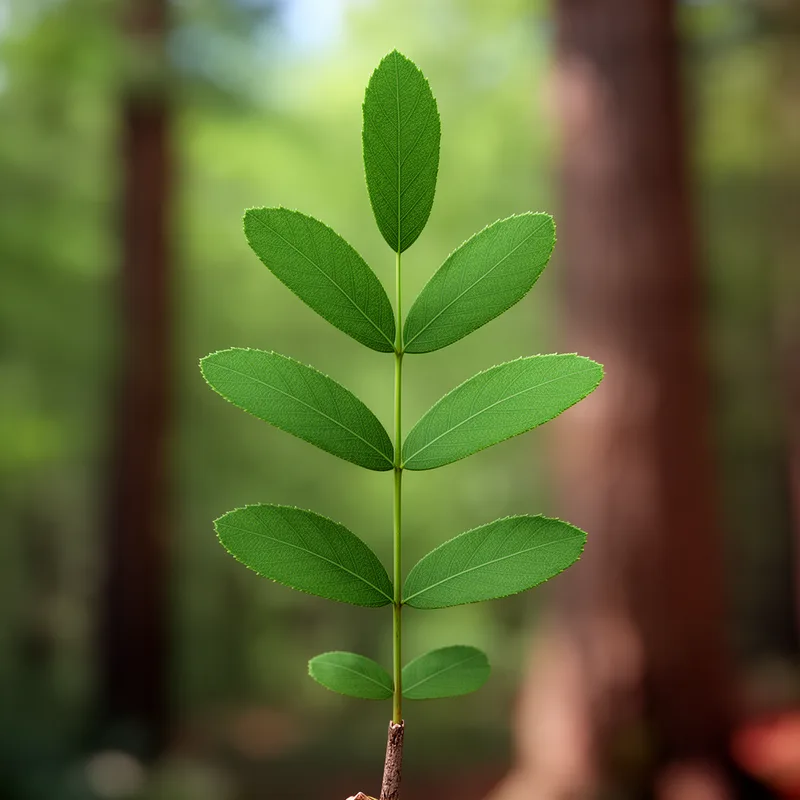
imparipinnate
- adjective
- /ˌɪmpærɪˈpɪneɪt/
- Specialized
- The ash tree has imparipinnate leaves, which means there is a single leaflet at the tip of each leaf.
Examples
-
The imparipinnate leaf structure is common in many leguminous plants.
-
The botanist identified the species by its imparipinnate leaf arrangement.
-
Many legumes display imparipinnate leaves as a distinguishing feature.
-
Is this plant imparipinnate or compound?
-
Many legumes display imparipinnate leaves, which have a single terminal leaflet, making them easily identifiable.
-
The ash tree is known for its imparipinnate leaves, characterized by one leaflet at the end of each stem.
-
In botany classes, students learn that imparipinnate leaves possess an odd number of leaflets due to the single terminal leaflet.
Synonyms

A leaf with pairs of small leaves and one small leaf at the tip
Surface Forms
Morphology
imparipinnate = paripinnate (semi-transparent) = im + pari + pinnate
Formed by regular negative prefix 'im-' + the technical botanical term 'paripinnate', so formation is regular but specialist vocabulary limits transparent access for general learners.
Etymology
Imparipinnate comes from Latin parts: im- meaning 'not', par meaning 'equal', and pinnate from a Latin word for 'feather'. So an imparipinnate leaf is a feather-like leaf that is 'not equal' at the tip, with a single extra leaflet at the end, giving an odd number of leaflets.

