

to idle
 1
3.2
1
3.2

- verb
- /ˈaɪdəl/
- After church, it was her wont to idle away a good half hour exchanging commonplaces with her neighbors.
- idle away
- idle away time
- idle around
Loading YouTube…
Watch on YouTubeBut I think that you're at your best when you're idling.
- But I think that you're at your best when you're idling.
- Yeah, To make videos or make pranks in general, I just idle.
- Hearts don't idle, they swell and constrict and break and forgive and behold, because it's like this, having a heart.
- So it is like useful for us to know sort of our, our what we're like in our idling state.
Examples
-
Not wanting to idle around the house, he wheeled out his motorcycle, which was stored on the cement sliver of a porch.
Fiction book (2001) -
After a long week of work, I just want to idle on the couch and relax.
-
But we all kind of idle at a different level, right?
-
Then it was different, you know, because we were mostly idle, right.
-
You just idle around and slow us down.
-
I'm not a woman who can sit idle and just cook and clean.
-
We idle at a corner discussing our plans before we head our separate ways.
Fiction book (1994) -
Idle away their time under a tree next to the line of cars parked around the drive.
Fiction book (1991) -
-You mustn't idle your time away.
-
You know, it’s not good to let her idle for too long.
Synonyms
 888
1.5
888
1.5
Spend time without any activity
 350
1.1
350
1.1
To spend time sitting and doing very little without a clear purpose
 43
3.7
43
3.7
To spend time doing nothing useful
 26
5.4
26
5.4
To stand or wait in a place without a clear reason
 12
6.7
12
6.7
To be inactive but able to become active again
 7
4.3
7
4.3
To spend time relaxing and doing very little
 5
3.8
5
3.8
To relax and do very little
 3
7.9
3
7.9
Spend time doing very little or nothing
 2
7.7
2
7.7
To spend time doing nothing useful
 2
8.6
2
8.6
To spend time doing very little and moving around without plans
 1
6.3
1
6.3
To spend time doing nothing or being inactive
 1
3.4
1
3.4
To spend time lazily doing little or nothing
 1
7.7
1
7.7
To spend time doing nothing and not working

To pass time by doing something not useful while you wait
Antonyms

Compounds





- Specialized
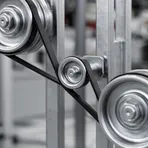
A wheel that presses on a belt to guide and keep it tight without powering the belt
How Busy

Surface Forms
Etymology
Idle comes from an old English word idel meaning 'empty' or 'useless'. To idle is to spend time 'doing nothing' or to stay inactive, like sitting and not working.