
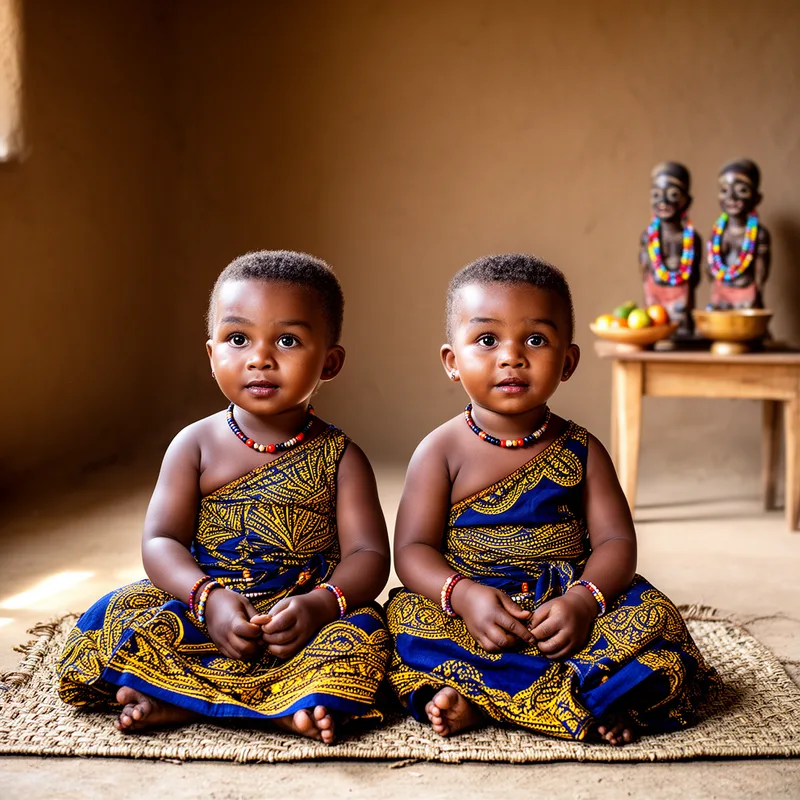
ibeji


 1
9.9
- noun
- /ɪˈbeɪdʒi/
- Literature
- Ifa, Akinjobi was instructed to carve a large figure, an Olori Ibeji, and then to sacrifice to it at regular intervals.
Examples
-
They popularized duplicated portraits or foto ibeji, and in so doing changed a cult use into a secular one (Figs. 13, 17, 39-41).
Academic text (2008) -
The famous ibeji tradition among the Yoruba is but one manifestation of the importance of doubles for the Yoruba (Fig. 8; see also Lawal, this volume).
Academic text (2008) -
From the beginning, I did not have a shrine for my twins; I used to keep my ere ibeji in my wardrobe.
Academic text (2001) -
Yet an ibeji can also at some stage be placed in a shrine (often a Shango shrine), where it is washed once a year with an indigo wash.
Academic text (2003) -
In the 1970s, and perhaps earlier, they used photography in the ibeji cult of deceased twins, assuming that duplicated portraits could fulfill the same function as ritual figures, as noted by Marilyn Houlberg:
Academic text (2008) -
In Yoruba culture, an ibeji is often treated with great reverence as a sacred representation of twins.
-
The community celebrates the birth of twins by creating a special ibeji figure to honor their arrival.
-
Families often place an ibeji in their homes to invoke blessings and protection for their twin children.
Surface Forms
Etymology
Ibeji comes from the Yoruba word for 'twins', and in Yoruba culture twins are often seen as special or sacred, so the word can mean either or both members of a twin pair. That is why ibeji refers both to the people who are twins and to the figures made for them.