
hyperborean
- adjective
- /ˌhaɪpərˈbɔriən/
- Literature
- Legends spoke of a hyperborean land where the sun never set during summer.
Examples
-
The hyperborean winds chilled us to the bone.
-
Few animals can survive the hyperborean winters of the far north.
-
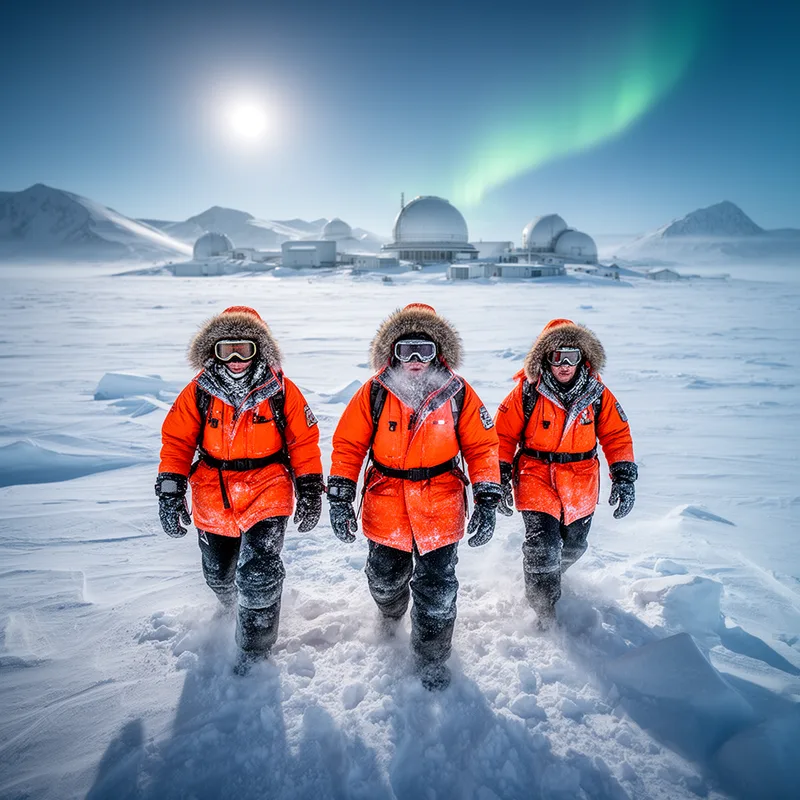
The team prepared special gear for the hyperborean conditions of the polar expedition.
-
Many myths speak of hyperborean lands filled with eternal sunlight.
-
The researchers studied the hyperborean climate to understand how plants adapt to extreme cold.
-
In ancient mythology, the hyperborean people lived in a land of perpetual winter, far to the north.
-
The hyperborean winds howled as the storm approached, bringing freezing temperatures and snow.
Synonyms

 14
4.5
14
4.5

Very cold, like the weather near the North Pole

From the north or northern areas, often about cold forests
About northern regions, often cold with forests
Antonyms

Compounds

How Cold

Surface Forms
Morphology
Etymology
The word hyperborean comes from the Greek parts hyper- 'beyond' and Boreas 'the north wind', so it literally means 'beyond the north wind'. A helpful image is a place 'beyond the north wind', which is why hyperborean describes very far northern or extremely cold places.