
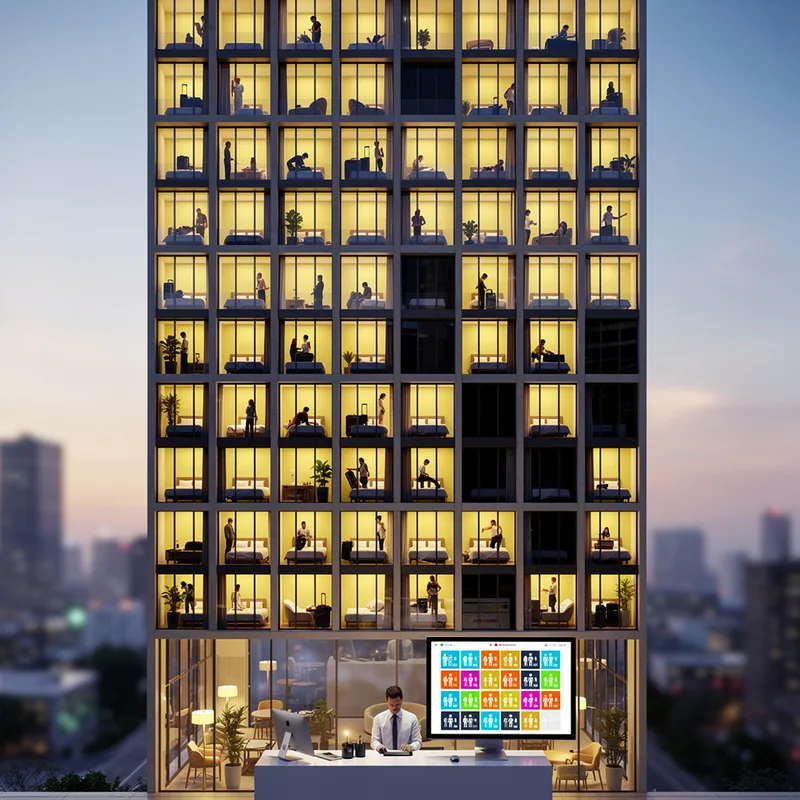
hotel occupancy
 1
3.2
1
3.2

- noun
- /hoʊˈtɛl ˈɑkjəpənsi/
- Specialized
- This month, the hotel occupancy has improved from last year, showing a recovery in tourism.
- hotel occupancy rate
- hotel occupancy and revenue
- increase in hotel occupancy
Examples
-
Riviera Maya is at its best since 2008, as its hotel occupancy levels are higher than 90% and looking forward to maintaining such levels until the end of the season.
Blog text (30) -
The metropolis has fully felt the effects of the real estate crash, including a 12% decrease in hotel occupancy for the first quarter of 2009, an increase in unemployment to 8.5% in March 2009, and a 9% year-over-year increase in foreclosures for April 2009.
Blog text (17) -
If you look at hotel occupancy, it looks like people are traveling a little more now.
Blog text (21) -
And the math works because hotel occupancy rates are at an all-time high.
Blog text (27) -
If not in a specific country, it is also possible for one to grab a hotel job in the emerging world, where hotel occupancy rates are still good, thanks to the growing wealth of people in these regions.
Blog text (3) -
YOY increase in hotel occupancy percentage, ignoring rate compliance, may not be the best method to increase hotel RevPAR.
Blog text (30) -
The hotel occupancy rate during the holiday season reached a remarkable 90%.
-
After the event, hotel occupancy in the city spiked significantly, reflecting increased visitor numbers.
Synonyms
 12
3.9
12
3.9
The number of people in a place at one time
 2
4.1
2
4.1
The percentage of available rooms or units that are occupied
How Full

Surface Forms
Morphology
The meaning is a straightforward noun–noun composition: it denotes the 'occupancy' (the number/proportion of people or rooms used) of a 'hotel', so the overall sense is directly derivable from the constituents. This is a common, non-idiomatic compound found cross-linguistically, so a B1 learner who knows both words will readily understand it.
Etymology
Hotel occupancy comes from the simple image of hotel rooms being occupied by guests; imagine a hotel as a row of seats and occupancy is how many are filled. That's why it means the 'percentage' of rooms in use.