

horse botfly
- noun
- /hɔrs ˈbɑtˌflaɪ/
- Specialized
- The veterinarian diagnosed the horse with an infestation of horse botflies and recommended immediate treatment.
Examples
-
You may notice the eggs of the horse botfly attached to your horse's legs or coat during summer.
-
Stables must be kept clean to help reduce the risk of horse botfly infestations among horses.
-
The horse botfly is a common parasite among horses.
-
Many horses suffer from horse botflies during the summer.
-
To prevent health issues, horse owners should regularly check for horse botfly larvae in their horses' digestive tracts.
-
The presence of horse botfly eggs on a horse's coat can indicate a potential parasitic infestation.
-
During the warm months, it's common for horse owners to treat their animals for horse botflies to avoid complications.
Synonyms
 1
9.9
1
9.9

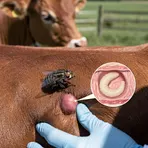
A large hairy fly whose larvae grow under the skin of mammals and cause pain
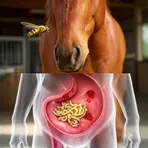
A fly whose young live in horses' stomachs and cause illness

A type of fly whose young live in horses' stomachs and can cause harm
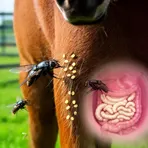
A group of flies that lay eggs on horses and live as parasites
Surface Forms
Morphology
This is a straightforward noun–noun compound where the modifier 'horse' restricts the head 'botfly' to a botfly associated with horses; the overall meaning (a botfly that infests horses) is directly derivable from the constituents. Such compound formation (type-of relationships) is common cross-linguistically and therefore immediately comprehensible to a B1 learner who knows both words.
Etymology
Horse botfly comes from a simple picture: a fly called a botfly lays eggs on a horse's legs or coat. When the horse licks the eggs the young hatch and live in the horse's stomach, so the name shows a 'botfly that lives in horses'.