
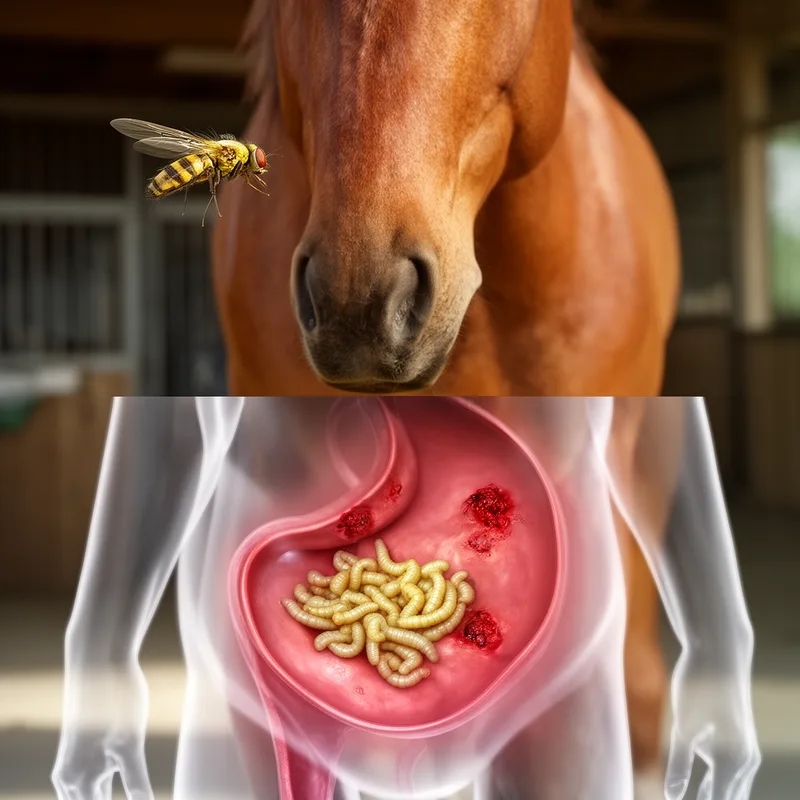
Gasterophilus intestinalis
- noun
- Specialized
- Veterinarians often check horses for signs of Gasterophilus intestinalis infestation during routine examinations.
Examples
-
The larvae of Gasterophilus intestinalis can cause gastric ulcers in their equine hosts.
-
Symptoms of Gasterophilus intestinalis infestation include weight loss.
-
Treatment programs are essential to control Gasterophilus intestinalis populations on horse farms.
-
The Gasterophilus intestinalis is a common parasite in horses.
-
The larvae of Gasterophilus intestinalis can cause gastric ulcers in their equine hosts.
-
Veterinarians often check horses for signs of Gasterophilus intestinalis infestation during routine examinations.
-
Treatment programs are essential to control Gasterophilus intestinalis populations on horse farms.
Synonyms

A large fly whose young live in a horse's stomach and intestines and harm it
Surface Forms
Morphology
Gasterophilus + intestinalis
The genus name 'Gasterophilus' indicates a type of fly affecting horses' digestion, and the species epithet 'intestinalis' is a Latin-derived form clearly related to English 'intestinal' (of the intestine). Together they compose the meaning 'the intestinal Gasterophilus' (a fly associated with the intestines), so a learner who knows both constituents can infer the MWE's meaning.
Etymology
Gasterophilus intestinalis gets its name from old Greek and Latin parts: gastero- meaning 'stomach', -philus meaning 'lover', and intestinalis meaning 'of the intestine'. The name gives a clear picture — the fly's larvae live in a horse's stomach and intestines, so it helps you remember they are stomach parasites.

