
homosporous
- adjective
- /ˌhoʊməˈspɔrəs/
- Specialized
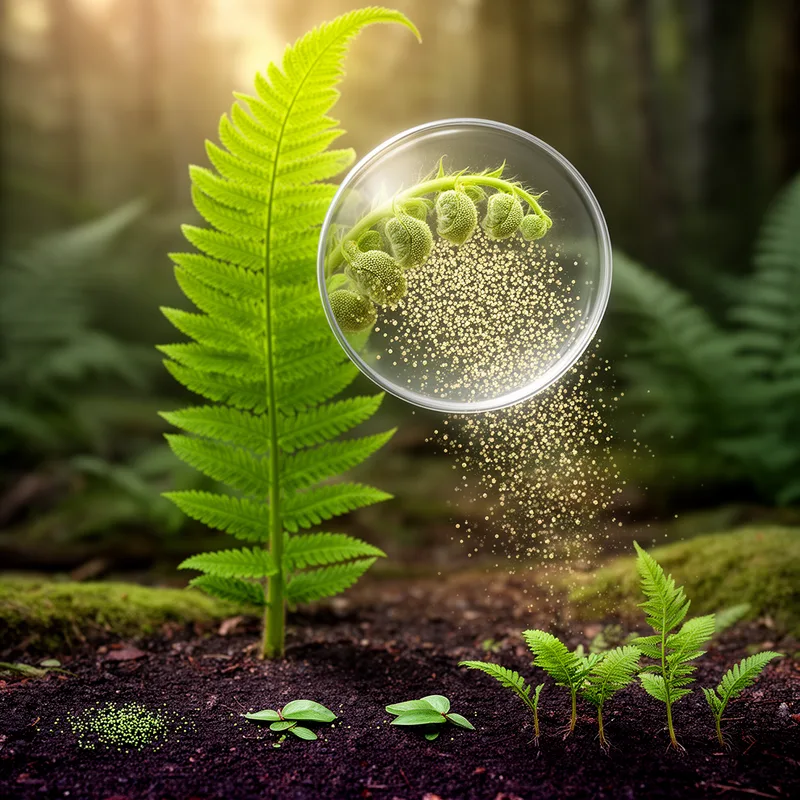
- Many ferns are classified as homosporous because they produce only one type of spore during their reproductive cycle.
- homosporous plant
- homosporous species
- homosporous pteridophyte
Examples
-
C-Fern is a derived cultivar of the homosporous fern Ceratopteris richardii (Hickok and Warne 1998).
Academic text (1998) -
Biologists have been intrigued by homosporous plants because they are genetically distinct from seed plants.
Academic text (2002) -
Both of these approaches have been applied to homosporous plants.
Academic text (2002) -
The study of the population biology of homosporous plants is still in its infancy.
Academic text (2002) -
Spores can bring about remarkable gene movement in homosporous plants.
Academic text (2002) -
The homosporous nature of these algae makes them different from other plants that produce multiple spore types.
-
Research shows that homosporous plants can adapt well to various environmental conditions due to their single spore type.
How Diverse
- Specialized


 1
9.9

- Specialized
Surface Forms
Morphology
homosporous = homospore (transparent) = homo + spor + ous
Derived from the combining form 'spor' plus the adjectival suffix '-ous' built on the noun 'homospore', giving an adjective meaning 'having/having the quality of one kind of spore'.
Etymology
Homosporous is made of the parts homo- ('same') and -spore ('spore'). So it literally means 'same spore' and is used for plants that produce only one kind of spore.