
homogeny


 1
9.9
1
9.9
- noun
- /həˈmɒdʒəni/
- Specialized
- Scientists study homogeny to understand the evolutionary relationships between different species.
Examples
-
The homogeny of the species suggests a common ancestor.
-
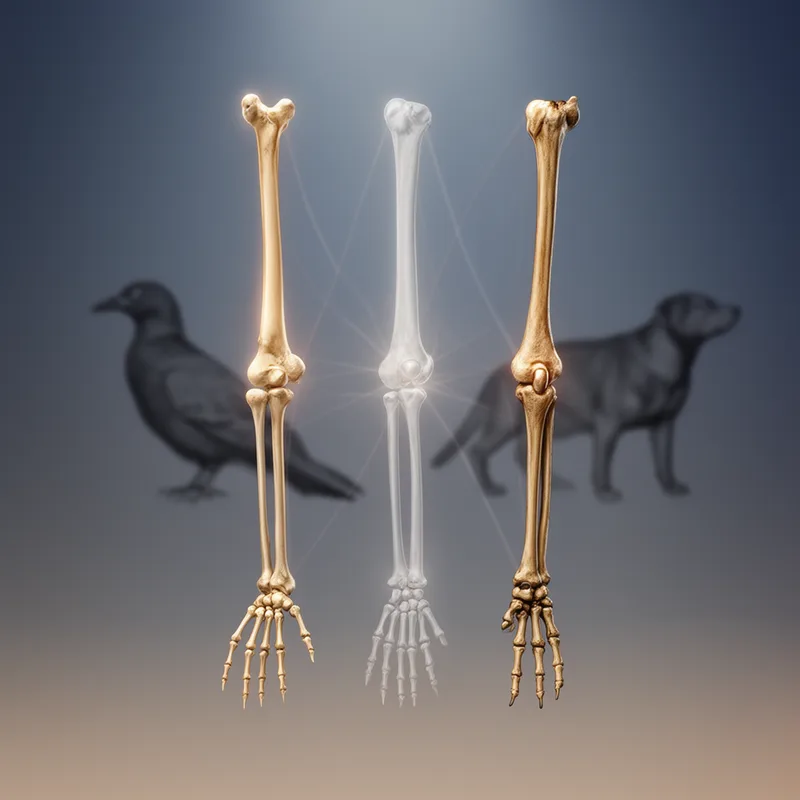
The presence of similar bone structures in birds and mammals demonstrates homogeny resulting from a distant common ancestor.
-
The concept of homogeny is central to modern evolutionary biology and taxonomy.
-
Many scientists study homogenies in evolutionary biology.
-
The homogeny of the species was evident in their similar physical characteristics.
-
Scientists studied the homogeny among different plant species to understand their evolutionary relationships.
-
Observing the homogeny in the bone structures of the two animals suggested they shared a common ancestor.
Synonyms
 2
9.8
2
9.8
Similarity in body parts or genes because different animals share an ancestor

A relationship showing how species are related because they came from the same older species

A similarity of shape or structure across organisms and their parts
Antonyms

How Similar
- Specialized
15
6.5

- Specialized
1
9.9
157
2.7
105
3.0
3
4.5
Surface Forms
Morphology
homogeny = homogeneous (semi-transparent) = homo + gen + y
The noun relates clearly to 'homogeneous' (sameness), but 'homogeny' is an uncommon noun form (learners more often see 'homogeneity'), so the formation may be slightly unexpected.
Etymology
The word homogeny comes from Greek parts homo- 'same' and -geny 'birth' or 'origin'. So homogeny means parts or structures that are alike because they come from the same origin or ancestor.