

highbush cranberry
- noun
- /ˈhaɪbʌʃ ˈkrænˌbɛri/
- US
- The highbush cranberry produces clusters of vibrant red berries in late summer.
Examples
-
The highbush cranberry produces bright red berries.
-
Wildlife such as birds are attracted to the fruit of the highbush cranberry.
-
Many gardeners plant highbush cranberry as an attractive ornamental shrub for their landscapes.
-
Many gardeners love to plant highbush cranberries in their yards.
-
The gardener planted highbush cranberry shrubs along the fence for their vibrant red berries.
-
In the fall, the highbush cranberry tree turned a beautiful shade of red, attracting many birds.
-
She prepared a delicious jam from the bright red berries of the highbush cranberry shrub.
Synonyms

A North American shrub with three-lobed leaves and bright red berries

A North American shrub with leaves in three parts that makes bright red berries
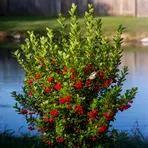
A North American shrub or small tree with three-lobed leaves and clusters of red berries
Surface Forms
Morphology
highbush + cranberry
The noun is transparently compositional: 'highbush' is analyzable as 'high' + 'bush' and combined with 'cranberry' yields a cranberry that grows on a taller shrub (as opposed to lowbush). Although it's a botanical term, the meaning follows regular English compounding patterns, so a B1 learner who knows 'high', 'bush', and 'cranberry' can reasonably infer the referent.
Etymology
Highbush cranberry comes from a simple picture: a fairly tall bush, with high showing its height, covered in bright red berries that look and taste like small cranberries. So the words describe the plant as a taller shrub with 'tart' red fruit.

