
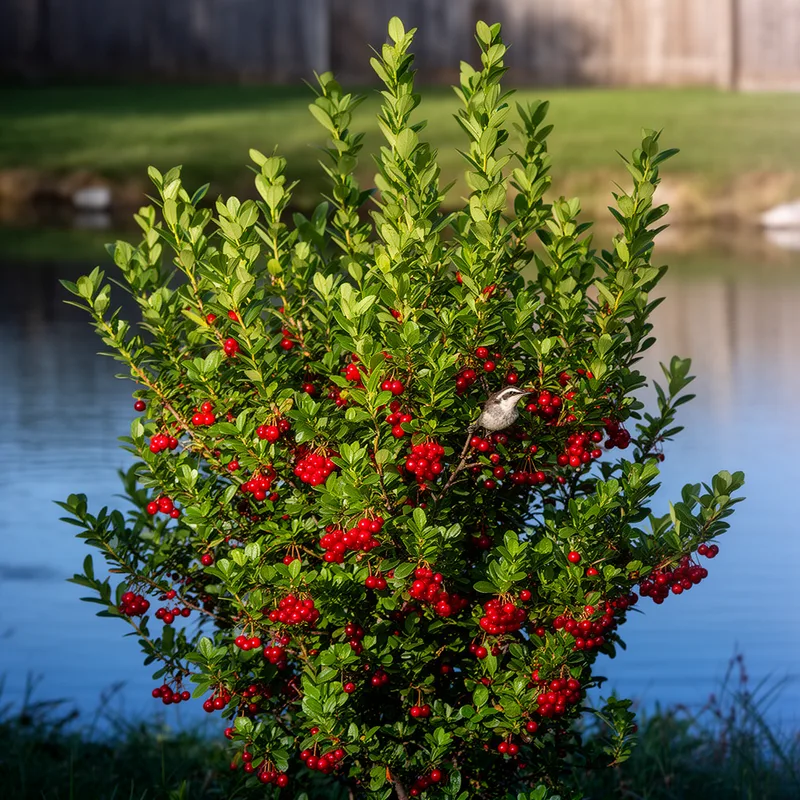
American cranberry bush
- noun
- /əˈmɛrɪkən ˈkrænˌbɛri bʌʃ/
- US
- The American cranberry bush is popular in gardens for its attractive clusters of red fruit.
Examples
-
Wildlife often feed on the berries of the American cranberry bush in the late summer.
-
She planted an American cranberry bush along the edge of her backyard pond.
-
The American cranberry bush is often found in wetlands.
-
I saw an American cranberry bush in the park yesterday.
-
The American cranberry bush thrives in wet, shaded areas of the forest.
-
During autumn, the leaves of the American cranberry bush turn vibrant shades of orange and red.
-
Birds love to nest in the dense branches of the American cranberry bush.
Synonyms

A North American shrub with three-lobed leaves and bright red berries

A North American shrub with leaves in three parts that makes bright red berries
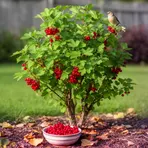
A North American bush or small tree with leaves in three parts and bright red berries people eat
Surface Forms
Morphology
The phrase is a straightforward compound noun: 'American' (origin), 'cranberry' (type of plant/berry) and 'bush' (small woody plant), so the meaning 'a cranberry-producing shrub from America' is directly derivable from the parts. This follows a common and transparent noun-noun-adjective composition pattern found across languages, so a B1 learner who knows the constituents would readily understand it.
Etymology
American cranberry bush is named for its simple look: it is a North American bush with bright red berries that remind people of cranberries. Because settlers and Native Americans often used the berries like 'cranberries' for food and sauce, the name helps you remember it is a shrub with edible red berries.

