
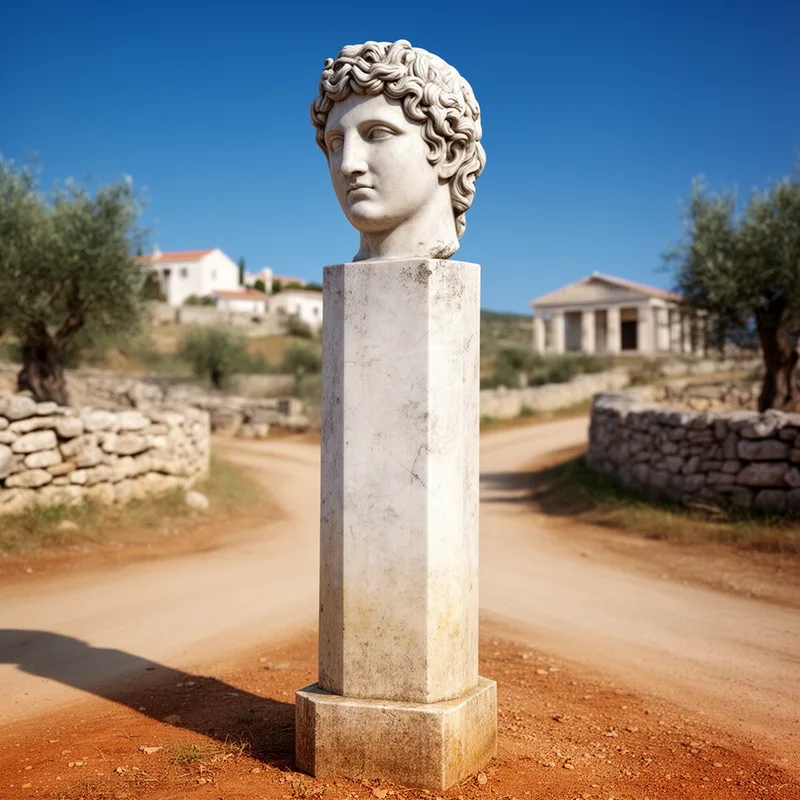
herma


 1
9.9
1
9.9
- noun
- /ˈhɜːrmə/
- Specialized
 :
herma
:
herma
- A herma often featured a carved head of Hermes.
Examples
-
The ancient Greeks erected a herma at the entrance of their city.
-
In ancient Greece, travelers would often pass by a herma that marked the boundary of a property.
-
The archaeologist discovered a well-preserved herma near the ruins of the ancient city.
-
A herma stood at the crossroads, marking the boundary between two villages.
-
Visitors admired the detailed carving on the herma displayed in the museum.
-
The herma, adorned with a finely carved head, stood proudly at the entrance of the estate.
-
Archaeologists discovered a herma near the ruins, which was used to designate sacred land.
Synonyms
 5
9.9
5
9.9
A carved statue or bust on top of a pillar that marks a boundary
 2
9.9
2
9.9
A square stone pillar with a carved head used to mark boundaries in ancient Greece
 1
9.9
1
9.9
A tall stone with writing that honors a person or event from long ago

A pointed stone pillar that marks a place
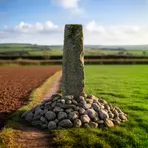
A pile of stones with a standing stone that marks a boundary
How Ornate

Surface Forms
Etymology
Herma comes from ancient Greek herma, which meant 'a pile of stones' and became linked to the god Hermes, who watched over borders and travelers. So a herma is a square stone pillar with a carved head that served as a boundary marker.