
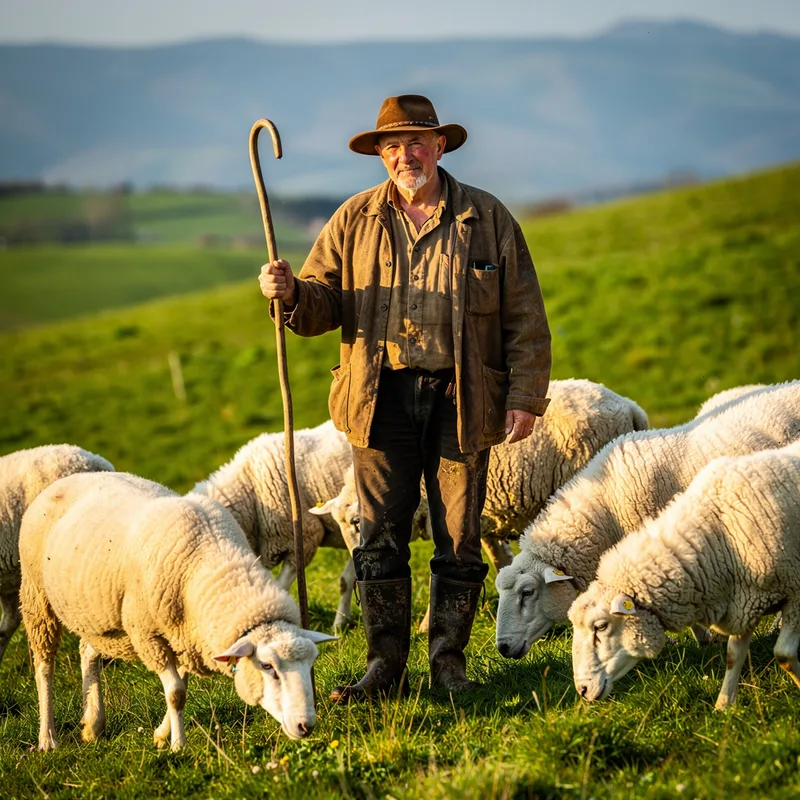
herder
 15
3.7
15
3.7

- noun
- /ˈhɜrdər/
- The herder guided the flock of sheep to the pasture every morning.
- herder of sheep
- nomadic herders
- cattle herders
Loading YouTube…
Watch on YouTubeThey had, they were, for example, goat herders whose property could be easily stolen.
- They had, they were, for example, goat herders whose property could be easily stolen.
- I am the grandson of a goat herder.
- He says that and I'd like you to be between the sheep herders and the moon dogs work like between the sheep herders and the moon dog.
- Umius, the pig herder, is the one whose stage manages the reunion with Penelope.
- You get that's outside maxed out with goats, you find a goat herder, it's all right in my lap, though, because this guy is literally coming right back and forth.
- And then you've got other threats, you know, such as terrorism, herders.
Examples
-
And they're sheep herders and goat herders and they eat huge amounts of goat and sheep cheese.
-
The most pressing problem for herders is access to sufficient pasture and water to sustain their herds.
Academic text (1999) -
Later that day, we met this herder, taking an afternoon rest beside the wall.
Academic text (2003) -
Well, the life of a goat herder is not that demanding.
-
The poor son of a sheep herder who had gone bankrupt.
-
In that case, herders no longer would have been able to live in the plains.
Academic text (2005) -
The government's intention was to protect herders in the southern and central regions from wide income fluctuations.
Academic text (1996) -
Syrian farmers and herders left their homes, swamped the cities, overwhelmed the infrastructure.
-
A change in climate makes it harder for farmers to grow their crops, fishermen to catch enough fish, herders to tend their livestock.
-
Below the aristocracy were various dependents, including employees, tenant farmers, herders who worked on contract, and slaves.
Academic text (1992)
Synonyms
 458
1.8
458
1.8
A person who looks after cattle, often riding horses
 93
1.9
93
1.9
A person who looks after and guides sheep on open land
 88
2.7
88
2.7
A person who owns or looks after a ranch that has cattle and sheep
 15
9.4
15
9.4
A person who moves cattle or sheep from one place to another
 4
3.2
4
3.2
A person who looks after and moves goats as a job
 4
4.2
4
4.2
A person who raises and looks after cattle on a farm or ranch
 4
4.6
4
4.6
A person who cares for cattle and works on a ranch, often riding a horse
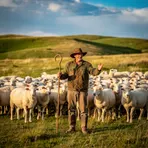 3
5.6
3
5.6
A person who looks after sheep on open land
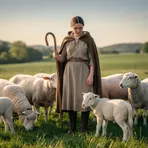 3
6.5
3
6.5
A woman who looks after sheep
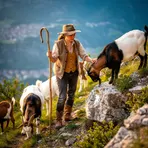 2
7.6
2
7.6
A person who takes care of goats
 1
5.0
1
5.0
A person who looks after and moves a group of animals like cows or sheep
 1
6.8
1
6.8
A person who looks after cows, often riding a horse on a farm
 1
9.9
1
9.9
A person who looks after cattle on a ranch, often on horseback
 1
7.4
1
7.4
A person who raises and looks after grazing animals like cattle or sheep
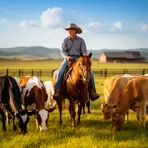

 1
5.5
1
5.5
A person who looks after cows on a farm or ranch, often riding a horse
 1
8.8
1
8.8
A person who looks after cattle or sheep on grassland for sale
 1
9.1
1
9.1
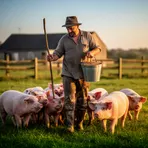
A person who looks after pigs
 1
9.9
1
9.9
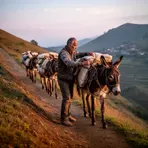
A person who drives and cares for mules as a job
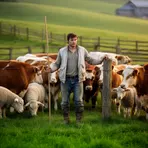
A person who looks after a group of animals like cows or sheep

A woman who looks after a group of farm animals like sheep or cattle
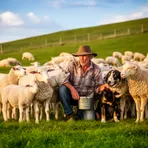
A man who raises and cares for sheep

A woman who looks after sheep in fields

A woman who owns and cares for cattle on a farm

A farmer who raises animals like cattle or sheep for food and milk
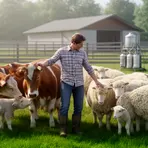
A person who keeps and breeds animals like cows and sheep for meat or milk

A person who looks after young goats
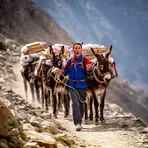
A person who leads mules to carry goods
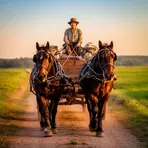
A person who drives animals like horses to pull a wagon or plough
Compounds
How Experienced

Surface Forms
Morphology
Etymology
The word herder comes from the simple word herd, which means 'a group of animals', plus the part -er, which means 'one who does something'. So a herder is literally 'one who cares for and moves a herd', which explains its modern meaning.