

henbane
 1
9.9
1
9.9

- noun
- /ˈhɛnˌbeɪn/
- Specialized
 :
hierba de la muerte
:
hierba de la muerte
- In herbal medicine, henbane is recognized for its toxicity and historical use in anesthesia.
- henbane and opium
Examples
-
Griffin's Henbane.
-
Henbane.
-
The herbs growing there are labeled: "Henbane," "Witch Hazel," "Deadly Nightshade."
Fiction book (1993) -
Did you also know that in the 1200s, in many places, including Britain and Byzantium, they were pretty good at anesthetizing a patient with mandragora, henbane, and opium?
Academic text (2008) -
Ancient physicians often used henbane as a sedative due to its potent effects.
-
Studies have shown that henbane contains compounds like hyoscyamine and scopolamine.
Synonyms

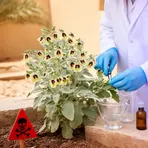
A poisonous plant also called henbane with sticky, hairy leaves and yellow-brown flowers that can cause hallucinations if eaten

A poisonous plant with a strong bad smell, sticky hairy leaves, and yellow-brown flowers

A poisonous plant with sticky, hairy leaves and yellow-brown flowers from Europe, Asia and North Africa
Compounds
- Specialized
A poisonous plant with sticky, hairy leaves and yellow-brown flowers from Europe, Asia and North Africa
- Specialized
A poisonous plant from North Africa and the Middle East whose leaves people use in medicine

- Specialized
A plant that grows on sandy shores and has yellow-green flowers and orange or yellow berries
Surface Forms
Morphology
Etymology
Henbane comes from Old English parts hen and bane, literally 'hen killer', because the plant was known to poison chickens. So the name helps you remember that henbane is a poisonous herb.