

hemimetamorphous
- adjective
- /ˌhɛmɪˈtɛmərfəs/
- Specialized
- Dragonflies are classic examples of hemimetamorphous insects, as their young live underwater before becoming aerial adults.
Examples
-
In a hemimetamorphous life cycle, the transformation from nymph to adult is gradual and lacks a pupal stage.
-
Many aquatic bugs are hemimetamorphous, passing through nymph stages that differ greatly from the adult form.
-
The hemimetamorphous insects, like dragonflies, have nymphs that differ greatly from the adults.
-
Many hemimetamorphous species thrive in freshwater environments.
-
Dragonflies are classic examples of hemimetamorphous insects, as their young live underwater before becoming aerial adults.
-
In a hemimetamorphous life cycle, the transformation from nymph to adult is gradual and lacks a pupal stage.
-
Many aquatic bugs are hemimetamorphous, with nymph stages that look quite different from their adult forms.
Synonyms

An insect whose young live in water and do not look like the adult

Having young that change slowly into adults without a pupal stage
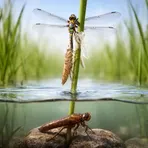
Insect development where young grow into adults by shedding skins without a pupal stage
Surface Forms
Morphology
hemimetamorphous = hemimetamorphosis (semi-transparent) = hemi + metamorphosis + ous
Forming an adjective from the noun 'hemimetamorphosis' with the productive suffix '-ous' is a regular and predictable process.
Etymology
The word hemimetamorphous is made of hemi- 'half', meta- 'change' and -morph 'form', the same pieces you see in metamorphosis and hemisphere. So it means a 'half change of form', which describes insects whose young change slowly and do not go through a full pupal stage.

