
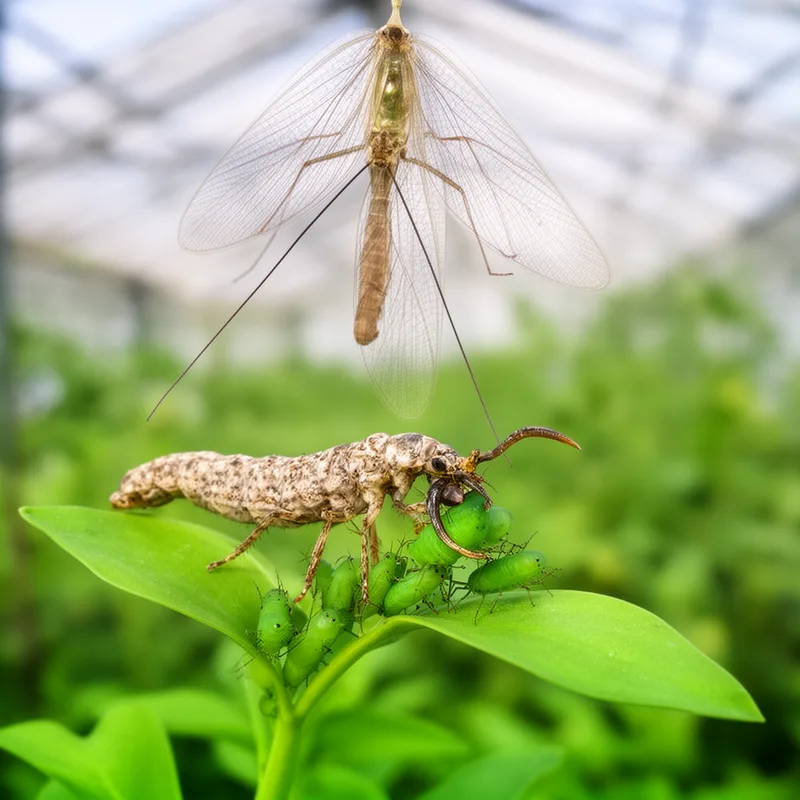
hemerobiid
- noun
- /ˌhɛmərəˈbiːɪd/
- Specialized
- A single hemerobiid can consume dozens of aphids in its lifetime.
Examples
-
Hemerobiid larvae are often used in biological pest control in greenhouses.
-
The entomologist collected a rare hemerobiid during his field study.
-
Look at that hemerobiid flying around!
-
The hemerobiid is often found in gardens.
-
Hemerobiid larvae are effective predators of aphids, making them valuable in organic farming.
-
In the ecosystem, a hemerobiid plays a crucial role by keeping pest populations under control.
-
The researcher observed a hemerobiid resting on a leaf, showcasing its delicate wings.
Synonyms
 1
8.9
1
8.9

A small insect with thin, net-like wings whose young eat aphids and other garden pests
A small brown fly with delicate wings that eats pests like aphids

A small brown insect with thin wings whose larvae eat aphids
A small delicate insect with thin net-like wings whose young eat garden pests like aphids
Compounds
How Big

Surface Forms
Morphology
hemerobiid = Hemerobiidae (opaque) = hemerobi + id
The term is a specialist taxonomic formation (member of the family name) and its structure and meaning are not predictable for average learners.
Etymology
Hemerobiid comes from Greek parts hemero- 'day' and -bios 'life', the same idea behind ephemeral ('short-lived'). So the name points to the insect's life or activity and helps you remember it is a small lacewing insect.