

hallucination
 1
8.1
1
8.1

- noun
- /həˌluːsɪˈneɪʃən/
- Specialized
- The researchers discussed how AI can generate hallucinations that seem real but are based on no factual evidence.
- consensual hallucination
Loading YouTube…
Watch on YouTubeChat generative AI might never get past the hallucination problem.
- Chat generative AI might never get past the hallucination problem.
- I think that one thing that people think about when they think about generative AI is the problem of hallucinations.
Examples
-
Users must be cautious, as the AI can present hallucinations that may mislead them about the information's accuracy.
-
Chat generative AI might never get past the hallucination problem.
-
But the "hallucinations" that we have created have produced a strange and fragmented world.
Academic text (1997) -
In 1984, William Gibson imagined the Net as a "consensual hallucination."
Academic text (1997) -
Gibson has referred to this kind of commonly shared virtual world as a "consensual hallucination" (1984, 51).
Academic text (1997) -
All of these questions are in the hands of the student pairs, who are constructing a story by manipulating interacting characters that they have created in a "shared hallucination" -- a computer environment for multiple users.
Academic text (1998) -
In artificial intelligence, a hallucination refers to a convincing but false output produced by a model.
Synonyms
 319
4.6
319
4.6
A false idea or appearance that makes you think something is true
 1
9.9
1
9.9
A believable memory a person makes without knowing to fill gaps in the past

A believable but false answer produced by a computer program without real evidence

An image made by a computer that looks real but is not based on real data
Antonyms

Compounds

- Specialized
1
7.9
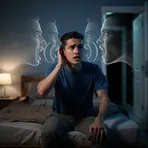
Seeing things that are not really there because the brain sends wrong signals
- Jargon
An image made by a computer that looks real but is not based on real data
How Plausible
- Specialized
1
8.1

- Specialized
300
3.0
29
6.5
46
4.3
578
2.5
Surface Forms
Morphology
hallucination = hallucinate (transparent) = hallucin + ation
The AI/ML sense is an application of the literal meaning 'to produce an unreal perception' to information generation; the noun formation from 'hallucinate' is regular and the metaphorical extension to fabricated information is predictable.
Etymology
Hallucination comes from the Latin word hallucinari, which meant 'to wander in the mind'. That is why people use the word for AI errors: the system 'wanders' from the facts and makes up information, like a machine version of a mind seeing things that are not true.