
gymnospermous
- adjective
- /ˌdʒɪmnəˈspɜrməs/
- Specialized
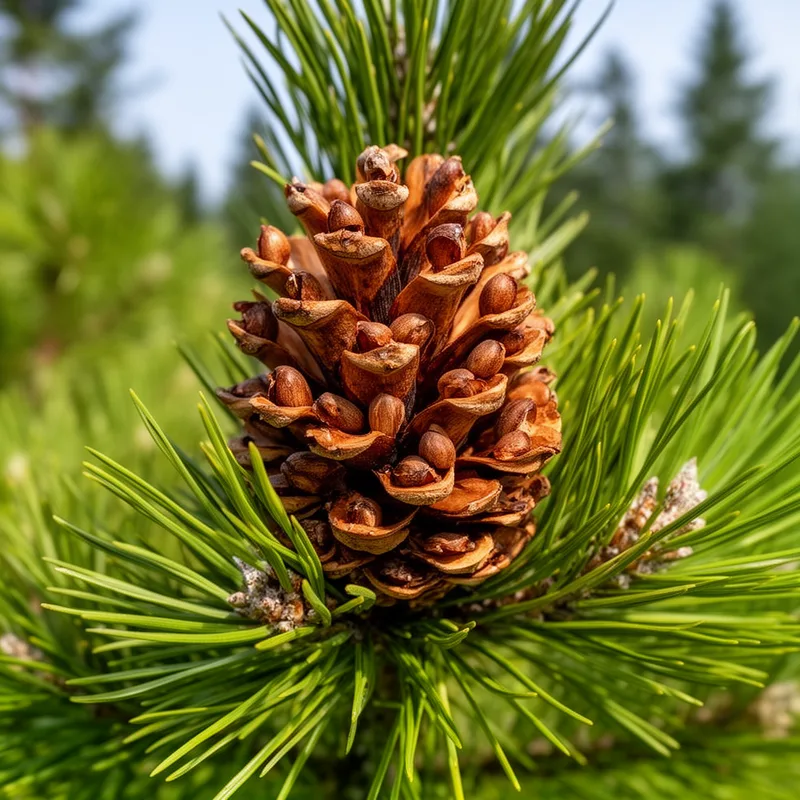
- Pine trees are gymnospermous and produce seeds without fruit.
Examples
-
Unlike angiosperms, gymnospermous species do not have flowers.
-
The gymnospermous plants are essential for understanding plant evolution.
-
The gymnospermous plants dominated the landscape during the Mesozoic era.
-
Are all conifers considered gymnospermous species?
-
Pine trees are gymnospermous and produce seeds without fruit.
-
The gymnospermous plants dominated the landscape during the Mesozoic era.
-
Unlike angiosperms, gymnospermous species do not have flowers.
Compounds
- Specialized
A tree that has seeds not covered by a fruit, often in cones like a pine

Surface Forms
Morphology
gymnospermous = gymnosperm (semi-transparent) = gymno + sperm + ous
The adjective is a straightforward adjectival formation from the noun 'gymnosperm' by adding '-ous', so the relation to the immediate base is clear.
Etymology
Gymnospermous comes from Greek parts gymnos meaning 'naked' and sperma meaning 'seed'. So a gymnospermous plant has 'naked seeds' that are not inside fruit, which is why pine trees make seeds without flowers or fruit.

