
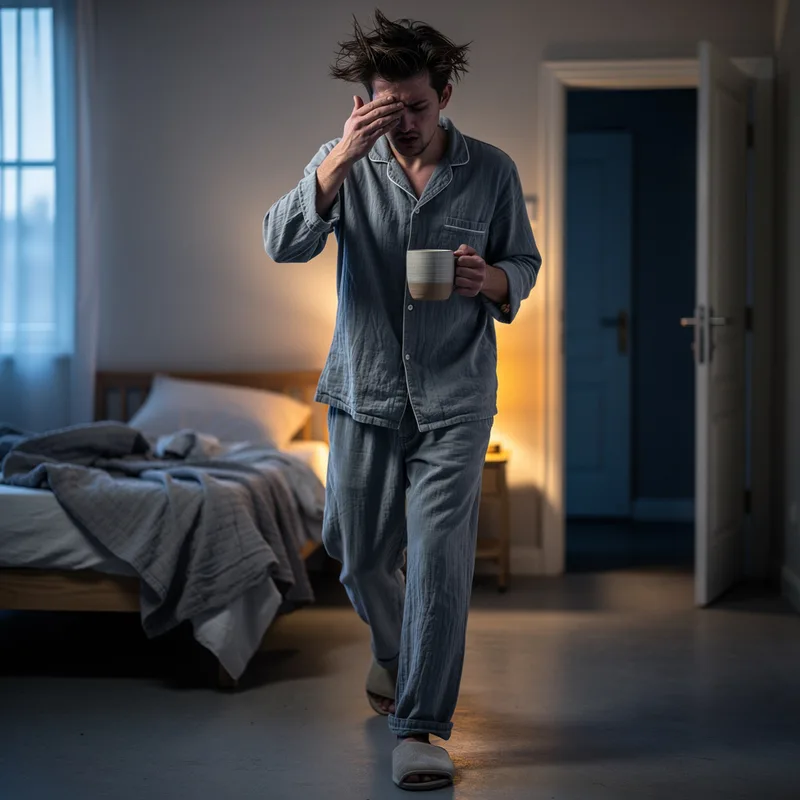
groggily
 3
4.1
3
4.1

- adverb
- /ˈɡrɑːɡɪli/
- Sam crawled out of bed groggily, feeling the fatigue from a restless night.
- said groggily
- asked groggily
- sat groggily
Examples
-
Laima gets to her feet groggily and heads for the bathroom.
Fiction book (1998) -
Julia is startled awake and groggily looks around the room.
Fiction book (2002) -
Rose is lying back on a pillow and staring groggily at her, obviously not quite all there.
Fiction book (1991) -
" I crawled groggily from bed and followed him to the dark living room.
Fiction book (1997) -
July groaned and rolled over, then groggily opened one eye.
Fiction book (1993) -
Many adults wait until they stumble groggily into the kitchen to get the coffee pot going.
Blog text (32) -
Paul rushes over to her as Edwards rises groggily to his feet.
Fiction book (1996) -
Daddy is staring groggily at the breast as if slightly dazed.
Fiction book (1991) -
Marsellus Wallace, from his position on the floor, groggily watches the pawnshop owner dial a number.
Fiction book (1994) -
Miss Elisabeth Bloch, startled out of near sleep by her bedside phone, groggily picks up.
Fiction book (1998)
Synonyms
 23
3.0
23
3.0
In a tired way that shows little energy
 7
1.0
7
1.0
Someone moves or speaks in a tired, half-awake way
 6
8.4
6
8.4
Moving slowly and not fully aware because you are very tired
 3
1.6
3
1.6
In a way that shows little energy
 1
2.4
1
2.4
In a sleepy, not fully awake way
 1
7.0
1
7.0
In a tired, half-awake way with blurry eyes


 1
4.9
1
4.9
In a very tired way after a long effort

In a sleepy, slow way as if just waking up

In a sleepy way, as if nearly asleep
Antonyms


How Groggy

Surface Forms
Morphology
Etymology
Groggily comes from the sailor word grog, a kind of 'rum' sailors drank — one popular story says a captain nicknamed 'Old Grog' gave his men watered rum so they often felt slow and dizzy afterwards. So groggily means moving or acting 'weak', 'tired', or 'confused', like someone just waking up or still feeling the effect of a drink.