
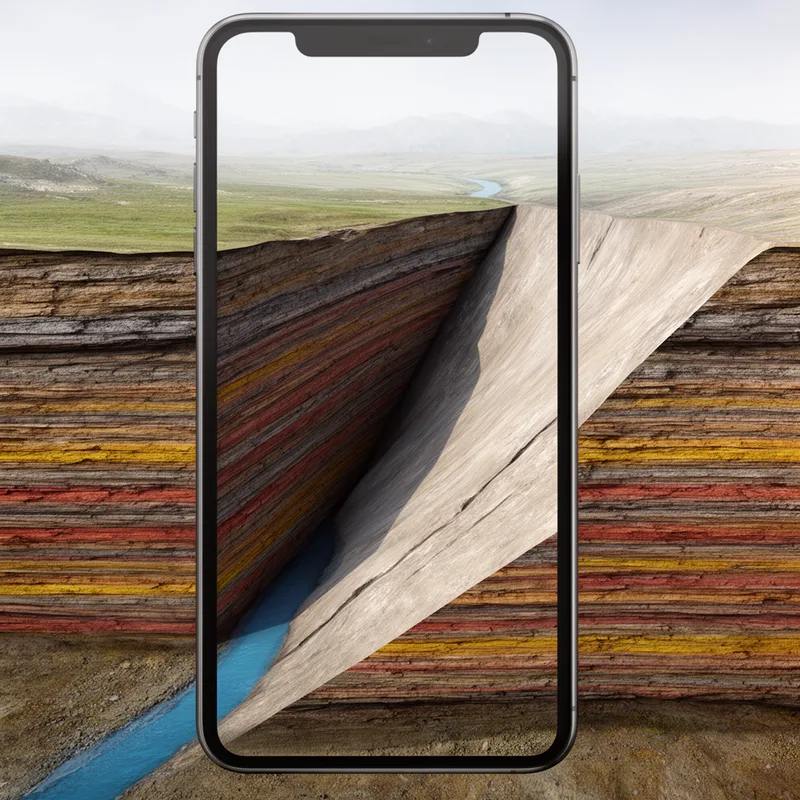
gravity fault
- noun
- /ˈɡrævɪti fɔlt/
- Specialized
- Geologists mapped the area and identified several gravity faults near the river basin.
Examples
-
The gravity fault in the region has caused several landslides.
-
In mountainous regions, gravity faults are common where the rock layers have shifted downward due to gravitational forces.
-
A gravity fault typically forms in regions where the Earth's crust is being extended.
-
The earthquake was caused by a major gravity fault deep beneath the Earth's surface.
-
Can you explain what a gravity fault is?
-
Geologists found a significant gravity fault that had shifted the landscape dramatically over the years.
-
The study revealed that the presence of gravity faults often leads to increased geological instability in the area.
Synonyms

 63
6.1
63
6.1

A crack in the earth's crust where the ground has moved

 1
7.0
1
7.0
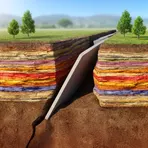
A sloping break in the Earth's crust where the upper side moves down past the lower side
 1
5.0
1
5.0
A crack in the Earth's crust where rock layers move

A break in rock where the top part moves down past the lower part

A break in the ground where one side moves up at an angle
Surface Forms
Morphology
The meaning is directly built from 'gravity' (a downward force) plus 'fault' (a tectonic fracture), so a learner who knows both words can infer it denotes a fault involving downward movement caused by gravity. While the precise geological details (e.g., hanging wall behavior) are technical, the general concept is compositional and follows normal noun‑noun compound logic, making it understandable to B1 learners.
Etymology
The noun gravity fault comes from a simple image: a crack where the rock above slides 'down' because gravity pulls it. The word fault means that crack, so the name means a fault caused by rock moving 'down' under gravity.