
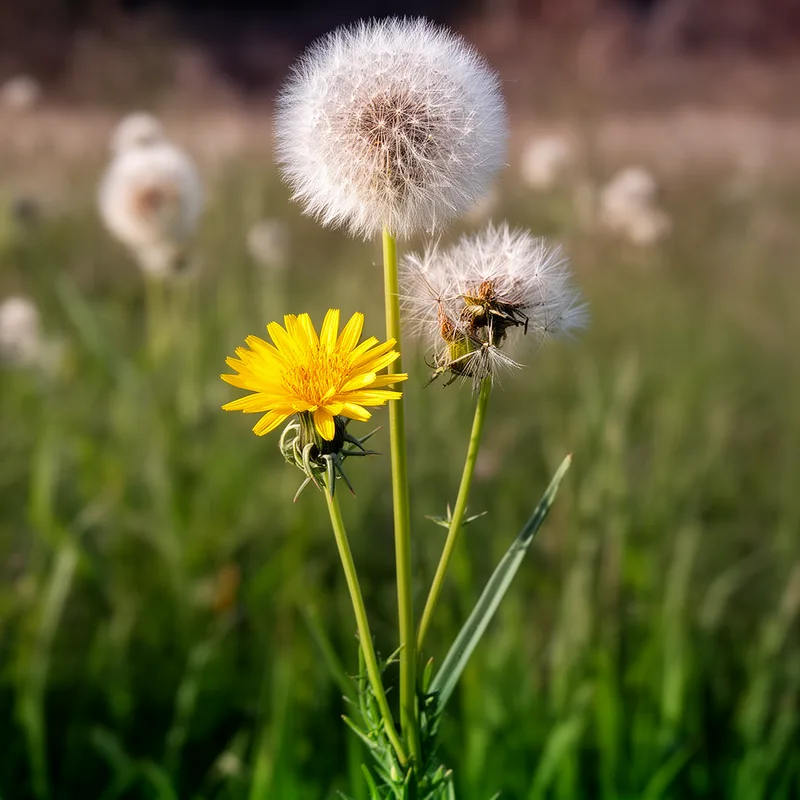
goatsbeard
- noun
- /ˈɡoʊtsˌbɪrd/
- UK
- At the beginning of the last century, two species of goatsbeard plants, Tragopogon dubius and T. porrifolius, were accidentally brought from Europe to the western United States, where they spread over large areas.
Examples
-
"Goatsbeard!" he yelled at a tall weed with a silver head that looked like spun sugar.
Fiction book (1993) -
The genetic mapping of plant species whose origins, like those of the goatsbeards, are rooted in a hybridization event can reveal exactly which genes come from which of the two parent species.
Academic text (2002) -
Who wore the full-length and who the goatsbeard?
Fiction book (2002) -
In gardens across the country, goatsbeard is often admired for its large yellow flowers and lush green foliage.
-
The goatsbeard plant, with its striking yellow blooms, is native to Europe but has become common in many American gardens.
-
Many gardeners enjoy planting goatsbeard because it thrives in moist soil and attracts various pollinators.
Synonyms
A common wild plant with yellow daisy-like flowers often found in meadows

A common weed with yellow flowers that grows near roads and in lawns

A plant with long grass-like leaves and yellow or purple flowers
Compounds

- Specialized
A North American garden plant with clusters of creamy white flowers that grows in moist shade
Surface Forms
Morphology
Etymology
The word goatsbeard comes from old words meaning 'goat' and 'beard' because the plant's long, fluffy seed head looks like a goat's beard, and even its scientific name Tragopogon comes from Greek tragos 'goat' and pogon 'beard'. So, the name helps you remember this yellow wildflower with a fluffy seed head.

