

to go over
 108
3.5
108
3.5

- phrasal verb
- /ɡoʊ ˈoʊvər/
- I came out of the graveyard, and Mr. Loflin told me to go over to May Anderson's house.
Loading YouTube…
Watch on YouTubeNo, Pancho sat down hard and went over forwards.
- No, Pancho sat down hard and went over forwards.
Examples
-
After they'd given up, he went over the mountain and used his radio to arrange a helicopter pickup.
Fiction book (1995) -
Hundreds of people are watching as the first train goes over it.
Fiction book (1996) -
We just went over a waterfall!
-
They are in the barrel, and they are going over the waterfall.
-
Andrew nodded to the doctor, who went over and unbolted the latch.
Fiction book (1990) -
Finally, he went over to the window and yanked back a gingham blue-checked curtain.
Fiction book (1996) -
As the boat approached the edge of the cliff, it suddenly went over and plunged into the water below.
-
During the storm, the tree fell and went over onto the house, causing significant damage.
-
The cyclist lost control and went over the handlebars when he hit a bump in the road.
Synonyms
 ∞
1.0
∞
1.0
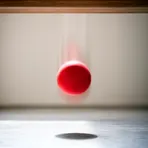
Move or drop down from a higher to a lower place
 250
1.0
250
1.0
Suddenly move from a standing position to the ground or a lower level
 93
4.1
93
4.1
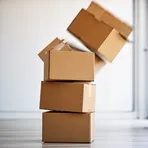
To fall over or make something fall over, often suddenly when it loses balance
 83
3.8
83
3.8
To fall or drop suddenly from a higher to a lower place
 67
1.0
67
1.0
To lose your balance or stop being steady and end up on the ground
 34
1.8
34
1.8
To fall from a higher place to a lower place
 27
3.0
27
3.0
Make something fall from a standing position
 16
5.7
16
5.7
Fall down suddenly because you faint or feel very weak
 7
5.4
7
5.4
To fall suddenly, for example by tripping or by losing value


 1
5.6
1
5.6
To lose balance and almost fall
 1
9.9
1
9.9
To fall in a clumsy way and land head over heels
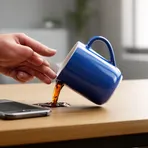
To make something that stands fall over

To make something fall over or turn upside down

To fall or sit down suddenly and hit your bottom
Antonyms

How Hard
2
5.1
 46
2.9
108
3.5
219
2.2
129
1.6
49
4.0
46
2.9
108
3.5
219
2.2
129
1.6
49
4.0
Surface Forms
Morphology
The sense 'to be received or perceived in a particular way' is not directly predictable from the literal meanings of 'go' (advance/unfold) and 'over' (above/across), although a loose motion/metaphor of something 'passing across' to others can hint at reception. Because that metaphorical linkage may sometimes help learners but does not reliably yield the specific reception meaning without exposure, this item is best classified as semi-transparent.
Etymology
Go over shows the image of something losing its balance and tipping over, like a chair that suddenly goes over. That's why it means 'to fall down'.